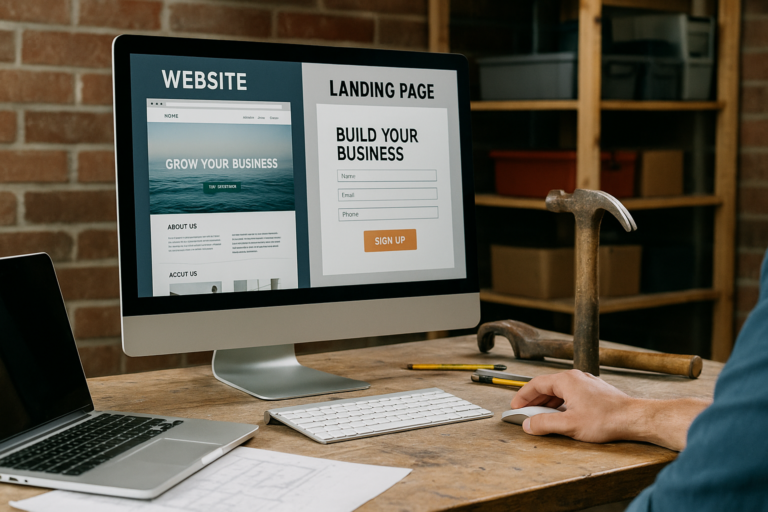

For many service businesses, the main website is expected to do everything at once. It explains the company, lists services, builds credibility, answers questions, and tries to generate leads. That sounds efficient, but it often creates a problem: the more jobs a single page or website section tries to do, the harder it becomes to guide a visitor toward one clear action.
That is where landing pages become valuable. Well-planned landing pages for service businesses are built around a specific offer, audience, or traffic source. Instead of asking a visitor to browse a full site and figure out what matters, a landing page gives them a direct path from interest to inquiry. Whether someone arrives from search, email, social media, or paid ads, the experience can be tailored to what they are looking for right now.
This matters even more in competitive local and regional markets, where people compare several companies quickly and make decisions based on clarity, trust, and ease of action. A visitor may only spend a short time deciding whether to call, book, or fill out a form. If the path is confusing, cluttered, or too broad, that lead may disappear.
Below is a practical look at why separate landing pages improve lead generation, how they support Google Ads landing page design, and what service businesses should consider when building a conversion focused web design strategy.
The Main Website and the Landing Page Serve Different Jobs
A main website is designed to present the full business. It usually includes multiple services, the about page, testimonials, blog content, contact details, and supporting resources. That broad structure is important because potential customers often need to understand who the business is and what it offers overall.
But broad websites are not always ideal for campaign traffic or highly specific search intent. A person searching for one exact service usually wants fast confirmation that they are in the right place. They do not necessarily want to sort through navigation menus, unrelated services, or general brand messaging before taking the next step.
A lead generation landing page has a narrower goal. It is built to support one offer, one audience, or one stage in the buying process. Instead of trying to educate every possible visitor, it focuses on the visitor most likely to convert from that traffic source.
For example, a home services company may have a main website with pages for plumbing, electrical work, heating, and maintenance. That structure works for brand credibility and organic browsing. However, if the company is running an ad campaign for emergency plumbing, sending visitors to the homepage creates friction. Sending them to a dedicated emergency plumbing landing page creates alignment.
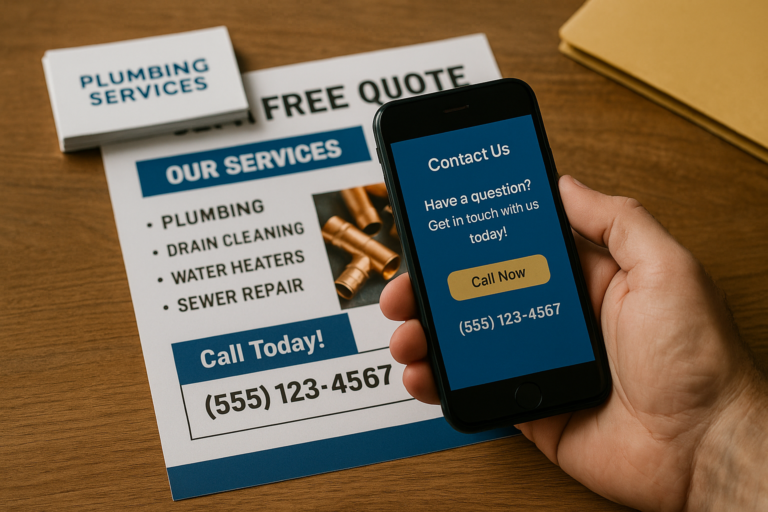
That page can immediately speak to urgent service needs, outline the service area, explain the process, and present a prominent contact form or call button. The message feels more relevant because it matches the user’s intent.
Landing Pages Improve Message Match
One of the biggest reasons landing pages for service businesses work so well is message match. This means the wording, offer, and expectations set by the ad, email, or search result are carried through on the page the visitor reaches.
When people click a link, they expect continuity. If they search for “commercial cleaning for medical offices” and land on a general cleaning company homepage, the experience can feel disconnected. They may need to hunt for the relevant service, wonder whether the business handles that type of client, or leave before finding the answer.
A dedicated landing page reduces that uncertainty. It can repeat the core value proposition in a headline, speak directly to the audience, and reinforce the service the visitor wanted in the first place.
This is especially important for Google Ads landing page design. Paid traffic is expensive compared with organic visits, and every unnecessary step reduces efficiency. If a service business pays for a click, it should give that click the best possible chance to become a lead. A page that reflects the specific keyword group, service category, and customer need usually performs better than a broad page with competing information.
Message match also helps trust. Visitors feel that the business understands their need because the page is clearly designed for it. That feeling can be the difference between a lead form submission and a bounce.
They Reduce Distractions and Make Conversion Easier
Most full websites contain many navigation options. That is useful for exploration, but it can lower conversions when a business wants a visitor to take one action. If a person can click to ten other pages, read blog posts, jump to unrelated services, or get lost in menus, they may never complete the original goal.
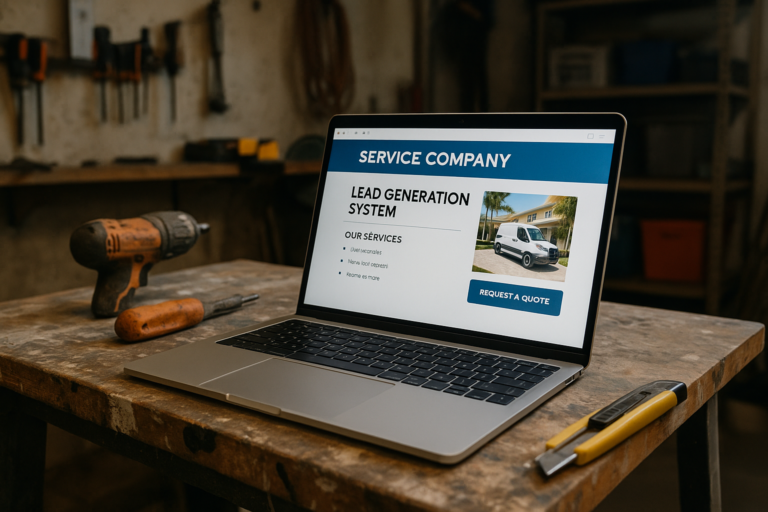
A lead generation landing page reduces those distractions. It presents a focused offer and a limited set of choices. The page may include a form, a call button, a simple explanation of the service, a few trust-building elements, and a clear next step. That structure helps visitors make decisions faster.
This is a core principle of conversion focused web design. Higher conversion rates often come not from adding more content, but from removing friction. Every extra click, every unclear headline, and every unrelated option creates work for the visitor. Good landing pages remove that work.
For service businesses, the desired action is often simple:
- Request an estimate
- Schedule a consultation
- Call for immediate help
- Book a service appointment
- Fill out a contact form
When a page is designed around one of those actions, the visitor does not need to guess what to do next.
Landing Pages Support a Stronger Service Business Website Funnel
A service business website funnel is the path a person takes from first interest to becoming a lead or customer. Not every visitor arrives at the same stage. Some are researching options. Others are ready to contact a company right away. A generic website can struggle to serve all of them equally well.
Landing pages allow a business to create more intentional entry points into that funnel.
Top-of-funnel visitors
Some visitors are learning about a problem or comparing providers. A landing page for this group may include more educational context, a clear explanation of the service, and reassurance about the process.
Middle-of-funnel visitors
These visitors usually know what service they need but are deciding who to hire. A landing page here might emphasize service-specific details, process clarity, project types, and trust signals.
Bottom-of-funnel visitors
These are ready to act. They need speed, clarity, and a strong call to action. A landing page for this stage should make contacting the business effortless.
By creating landing pages around different services, audiences, and campaign goals, service businesses gain more control over how leads move through the funnel. Instead of forcing every visitor into the same experience, they can create pages that better reflect where that person is in the decision process.
They Help Segment Services More Effectively
Many service businesses offer multiple services, service levels, or customer types. A general website may mention all of them, but that can weaken the relevance of any one page.
Separate landing pages make it easier to segment offers clearly. A business can create dedicated pages for:
- Specific service categories
- Specific industries or client types
- Residential versus commercial audiences
- Seasonal services
- Promotions or time-sensitive campaigns
- Geographic service areas
This structure helps visitors see the business as more specialized and more relevant to their needs. It also makes campaign planning easier. If a company wants to promote one service heavily, it can direct traffic to a page built specifically for that service rather than relying on a broad page that only mentions it briefly.
For example, a legal practice, contractor, consultant, cleaning company, or wellness provider may each serve different customer needs under one brand. Separate landing pages let each audience see language and information that feels tailored instead of generic.
Landing Pages Can Improve Paid Ad Performance
Google Ads landing page design is about more than appearance. It is about alignment, usability, relevance, and clarity. A dedicated landing page often supports paid performance because it creates a smoother transition from keyword to ad to action.
When the landing page reflects the searcher’s intent, several benefits can follow:
- Higher relevance between ad and destination page
- Better visitor engagement
- Lower bounce rates from mismatched traffic
- More efficient lead capture
- Clearer campaign measurement
Even small improvements can matter. If a campaign sends dozens or hundreds of clicks each month, a more focused page can help a business learn which services, offers, and messages generate the strongest response.
Dedicated pages also make testing easier. A service business can compare different headlines, form lengths, trust elements, layouts, or calls to action. That kind of testing is much harder when traffic is sent to a homepage or a general service page designed for multiple purposes.
They Make Tracking and Optimization More Practical
One of the less obvious advantages of separate landing pages is cleaner data. When all campaign traffic goes to the homepage, it becomes difficult to understand which message, service, or source actually led to a conversion. Homepage traffic is often mixed, and user behavior can be inconsistent because people explore in many different ways.
A dedicated landing page creates a more controlled environment. If a campaign sends traffic to a page for one service and one conversion goal, performance becomes easier to measure.
That helps service businesses answer practical questions such as:
- Which ad group produces the highest-quality leads?
- Which service generates the most form submissions?
- Does a shorter form increase conversions?
- Does a stronger headline reduce page exits?
- Are mobile visitors converting at the same rate as desktop users?
Those insights support better marketing decisions. Instead of guessing why a campaign underperformed, the business can review a more focused set of variables.
Better Landing Pages Create Better User Experiences
Some businesses think of landing pages only as marketing tools, but they are also user experience tools. A visitor who lands on a page built around their exact need is more likely to feel understood and less likely to feel overwhelmed.
Good user experience matters because service purchases often involve trust, urgency, or uncertainty. People may be choosing a provider for an important issue, comparing costs, or trying to solve a problem quickly. The page should help them feel confident and informed, not lost.
Strong conversion focused web design usually includes:
- A headline that immediately confirms relevance
- Clear supporting copy that explains the service
- Visible contact options
- Simple forms with only necessary fields
- Trust-building elements such as credentials, experience, process details, or testimonials when available
- Readable layout with mobile-friendly spacing
- Fast loading performance and minimal clutter
All of these elements support both usability and conversion. A page that is easier to use is often a page that converts better.
Common Mistakes Service Businesses Make Without Separate Landing Pages
Many businesses do not avoid landing pages on purpose. Often, they simply rely on the website they already have and expect it to work for every traffic source. This can lead to several common problems.
Sending all traffic to the homepage
The homepage may be polished, but it is rarely the best destination for every visitor. It usually introduces the full business rather than one exact offer.
Using one general service page for multiple campaigns
If several ads or promotions point to the same broad page, the message can become too generic. Visitors may not see enough relevance to take action.
Overloading a page with too much information
Trying to answer every possible question on one page often weakens the core message. Important actions become buried beneath unrelated content.
Making the next step unclear
Visitors should know what to do within seconds. If the contact action is hard to find or the page presents too many options, leads can be lost.
Ignoring mobile behavior
Many service inquiries happen on phones. A landing page that is difficult to scan, slow to load, or awkward to complete on mobile will likely underperform.
What an Effective Lead Generation Landing Page Should Include
Not every landing page needs the same structure, but most successful pages for service businesses share several essentials.
A clear, specific headline
The headline should confirm the visitor is in the right place. It should reflect the service or need that brought them there.
Focused supporting copy
The page should explain the service clearly without wandering into too many unrelated topics. Keep the message tied to the main conversion goal.
A strong call to action
The next step should be visible and easy to understand. Whether the action is to call, request a quote, or schedule a consultation, it should be prominent.
Trust elements
Visitors need reasons to feel confident. Depending on the business, this may include testimonials, years in business, service process details, case examples, or professional affiliations.
Simple forms
Forms should ask for the information needed to qualify a lead without becoming frustrating. Long forms often reduce completion rates unless the service requires detailed screening.
Consistent design and branding
Landing pages should be focused, but they should still feel connected to the main brand. Consistency supports trust.
Mobile-friendly layout
Buttons, forms, spacing, and text should work well on smaller screens. Mobile usability is a basic requirement, not an extra feature.
When Separate Landing Pages Make the Biggest Difference
Almost any service business can benefit from them, but the value becomes especially clear in certain situations.
- Running paid ad campaigns for specific services
- Targeting different customer segments
- Serving multiple locations or service areas
- Offering urgent or high-intent services
- Promoting seasonal campaigns
- Trying to improve lead quality rather than just traffic volume
- Needing better measurement of campaign performance
In these cases, relying only on the main website often limits how precisely the business can speak to the visitor’s intent.
Conclusion
The main website remains essential for credibility, brand presence, and broad service information. But it should not be expected to handle every marketing objective equally well. Separate landing pages give service businesses a more direct, measurable, and conversion-oriented way to turn interest into action.
By improving message match, reducing distractions, supporting campaign tracking, and strengthening the overall service business website funnel, landing pages can make marketing efforts more efficient and user experiences more relevant. They are especially valuable for lead generation, paid campaigns, and service-specific offers where intent is clear and competition is strong.
For service businesses that want a more strategic online presence, the question is not whether the website matters. It is whether every visitor is being sent to the page most likely to help them take the next step. In many cases, a dedicated landing page is the better answer.