For many local companies, running ads on Google sounds simple: choose a few keywords, write a short ad, set a budget, and wait for calls or form submissions. In reality, effective Google Ads for Miami small businesses takes more planning than that. A campaign can spend money quickly without producing meaningful leads if the targeting, messaging, and landing pages are not aligned with real customer intent.
Miami is a competitive market with diverse neighborhoods, bilingual audiences, mobile-first search behavior, and strong local intent. People search for immediate solutions close to where they live, work, or travel. That creates a real opportunity for businesses that want to appear at the right moment with the right offer. It also means a generic campaign is rarely enough.
This guide explains how small businesses can build a practical, local-first Google Ads system designed to attract qualified leads instead of low-value clicks. Whether you manage campaigns in-house or work with a Google Certified Partner Miami agency, the principles are the same: focus on relevance, control, and conversion quality.
Why Google Ads works well for Miami small businesses
Google Ads is one of the most effective platforms for local service promotion because it captures demand that already exists. Unlike interruption-based advertising, paid search places your business in front of people who are actively looking for help. That matters for businesses that depend on inquiries, appointments, consultations, bookings, or calls.
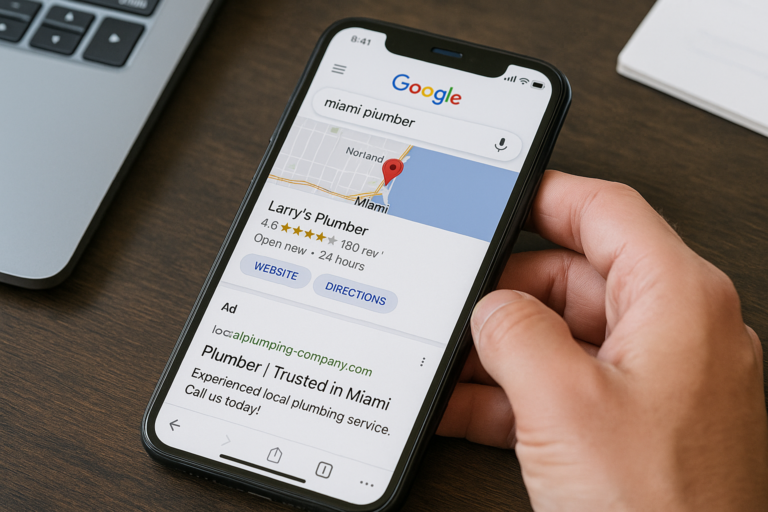
In Miami, search behavior often includes geographic modifiers and urgent intent. Prospects may search for services using terms like “near me,” “Miami,” “Downtown,” “Brickell,” “Coral Gables,” “Kendall,” or “Miami Beach.” They may also search from mobile devices while on the go, making location targeting and mobile user experience especially important.
A well-built campaign can help a local business:
- Show up when nearby customers are actively searching
- Filter traffic by service type, geography, and intent
- Generate calls, contact forms, bookings, and quote requests
- Measure which keywords and ads produce real leads
- Scale budget toward higher-performing local opportunities
The key is not just getting traffic. It is building a small business Google Ads strategy that attracts people who are likely to become customers.
Start with lead quality, not just clicks
One of the biggest mistakes in Miami PPC management is optimizing too early for cheap clicks or high traffic. Those metrics can look good in a dashboard but still fail to support business growth. A qualified lead is someone who matches your service area, needs the service you actually provide, and is ready enough to take action.
Before setting up campaigns, define what counts as a good lead. That usually includes details such as:
- The services you most want to promote
- The neighborhoods or ZIP codes you serve
- The customer types you want to attract
- The actions that matter most, such as phone calls, form submissions, appointment requests, or estimate requests
- The situations you want to avoid, such as low-budget shoppers, irrelevant service requests, or out-of-area inquiries
This foundation shapes every later decision, from keywords to ad copy to landing page structure.
Choose campaign goals that support local lead generation
Many small businesses launch a single broad campaign and hope Google’s automation figures everything out. That approach often limits control. For stronger local lead generation Google Ads performance, campaign structure should reflect real services and customer intent.
Separate campaigns by service category
If your business offers multiple services, avoid putting everything into one ad group with a mixed keyword list. Instead, create campaigns or tightly themed ad groups based on distinct offerings. This helps your ads match searches more accurately and sends users to the most relevant landing page.
For example, a service-based company might split campaigns by:
- Primary service A
- Primary service B
- Emergency or urgent service
- Brand terms
- Competitor comparison terms, if appropriate
This improves both ad relevance and reporting clarity.
Focus on conversions, not visibility alone
Brand awareness has value, but most small businesses need measurable lead activity. In Google Ads, that means setting up conversion actions properly. Depending on the business, useful conversions may include:
- Phone calls from ads
- Calls from the website
- Contact form submissions
- Appointment bookings
- Quote requests
- Location-based actions, if relevant
Without clean conversion tracking, it is difficult to know which campaigns are truly producing results.
Use local keyword targeting with clear intent
Keyword selection is one of the most important parts of a successful campaign. High-performing local search campaigns generally target terms that indicate commercial intent rather than broad curiosity.
Prioritize high-intent searches
Good keywords often combine a service with a location or action. That could include service-plus-city terms, “near me” searches, urgent problem-based searches, and phrases used by people comparing providers.
Examples of stronger intent patterns include:
- Service + Miami
- Service + near me
- Best service + Miami
- Emergency service + Miami
- Quote for service + Miami
These tend to be more useful than broad, informational terms that attract users still researching.
Build a negative keyword list early
Negative keywords are essential for filtering out irrelevant traffic. They help prevent wasted spend on searches unrelated to your actual offer. Common negative keywords may include terms connected to jobs, free resources, DIY intent, training, definitions, or unrelated service variations.
For example, if your company only serves paying local customers, you may want to exclude searches that suggest:
- Employment seekers
- Free services
- How-to tutorials
- Products you do not sell
- Locations you do not serve
Strong keyword management is a core part of effective Miami PPC management because it protects budget while improving lead quality.
Target the right Miami geography
Location settings deserve more attention than they often get. A campaign that targets too broadly may pull in clicks from users outside your service area. A campaign that targets too narrowly may miss valuable demand nearby.
Define service areas based on real operations
Think in terms of where you can realistically serve customers profitably and promptly. That may mean targeting specific cities, neighborhoods, ZIP codes, or radius areas. For a Miami-based business, local targeting might include selected zones rather than all of South Florida, depending on your model.
Useful targeting options can include:
- Specific neighborhoods with strong demand
- Nearby cities within your service footprint
- ZIP code targeting for high-value areas
- Exclusions for places outside your range
If your business depends on in-person appointments, foot traffic, or field service, geographic precision matters even more.
Pay attention to language and audience context
Miami’s market is multilingual and culturally diverse. Depending on your customers, bilingual ad messaging or Spanish-language campaigns may be worth testing. The right setup depends on your actual customer base, internal sales capacity, and landing page experience. If someone clicks an ad in one language but lands on a page in another without clarity, conversion rates can suffer.
Write ads that qualify the click
Good ad copy does more than attract attention. It helps the right prospects self-select. That means your messaging should be specific enough to bring in people who are likely to convert, while discouraging people who are not a fit.
Use local relevance in headlines and descriptions
Ad copy should reflect what the searcher wants and where they are looking. Mentioning Miami or your service area can improve local relevance. So can highlighting a clear benefit, response type, or service specialty.
Strong ad copy often includes:
- The exact service being searched
- Local wording that matches the target area
- A practical benefit or differentiator
- A clear call to action
For example, instead of a vague message about “quality solutions,” focus on the service offered, the location served, and the next step the user should take.
Use extensions to improve visibility and trust
Google Ads assets, sometimes called extensions, can make your ads more useful and increase the amount of information shown. Depending on the campaign, helpful assets may include:
- Call assets
- Location assets
- Sitelinks
- Callouts
- Structured snippets
- Lead form assets, where appropriate
These features can support stronger local lead generation Google Ads performance by making it easier for searchers to contact or evaluate your business quickly.
Send traffic to focused landing pages
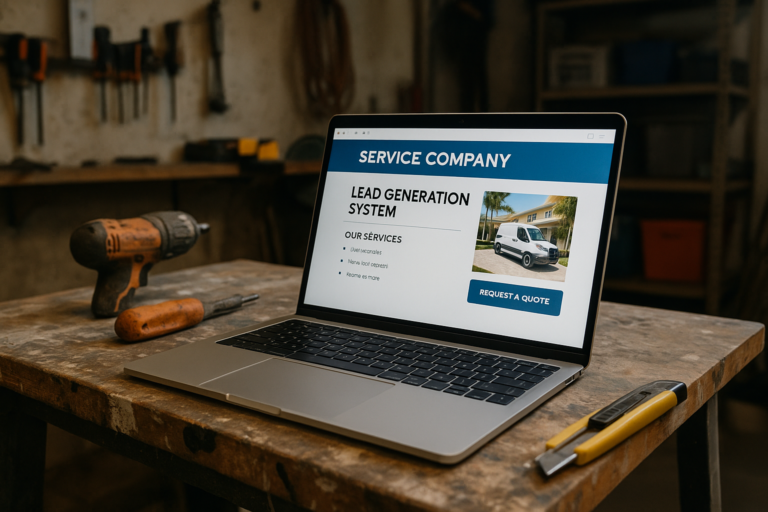
Even a well-targeted ad can underperform if it sends traffic to a generic homepage. The landing page should continue the conversation started by the ad. If someone searches for a specific service in Miami, the page should clearly address that exact need.
Match the page to the keyword and ad
A strong landing page usually includes:
- A headline aligned with the search intent
- A short explanation of the service
- Clear service area references
- Trust-building details such as experience, process, or service focus
- A visible contact form or call button
- Mobile-friendly design and fast loading
Too many distractions can reduce conversion rates. Keep the page focused on one main action.
Make mobile conversion easy
Many local searches in Miami happen on phones. If your website is hard to navigate on mobile, your campaign may lose leads even when the targeting is strong. Use tap-to-call buttons, short forms, readable text, and simple page layouts. Speed and usability are not secondary details. They are part of conversion performance.
Set realistic bidding and budgeting expectations
Small businesses often ask how much they should spend on Google Ads. The practical answer depends on competition, service type, location, average lead value, and how efficiently the campaign is managed. What matters most early on is not chasing the biggest budget but giving the campaign enough room to gather useful data.
Start with focused spend
Instead of spreading budget across too many services, concentrate on the most valuable or proven offers first. This makes it easier to learn what works and improve campaign efficiency over time.
In many cases, a better early strategy is:
- Launch fewer campaigns with tighter targeting
- Prioritize high-intent keywords
- Direct traffic to strong landing pages
- Review search terms regularly
- Shift budget toward better-converting segments
This is often more effective than trying to cover every possible keyword from the beginning.
Use automation carefully
Google’s automated bidding tools can be helpful, but they work best when supported by accurate conversion data. If tracking is weak or lead quality is inconsistent, automation may optimize toward the wrong outcome. Businesses should make sure the system is learning from meaningful conversions, not just any click or low-quality form fill.
Measure the right metrics
Clicks, impressions, and click-through rate can be useful, but they are not enough on their own. The real question is whether your campaigns produce qualified local leads at a sustainable cost.
Track metrics tied to business results
Important performance indicators often include:
- Number of qualified leads
- Cost per lead
- Conversion rate
- Phone call volume and quality
- Search term relevance
- Landing page performance
- Lead-to-customer rate, when available
If possible, connect advertising data with what happens after the lead comes in. Some keywords produce more inquiries, while others produce better customers. That difference matters.
Review search term reports often
Search term data helps reveal how people are actually finding your ads. It can uncover irrelevant queries that should be excluded, as well as strong new keyword themes worth expanding. Ongoing search term review is one of the most important maintenance habits in small business Google Ads strategy.
Common mistakes that reduce lead quality
Many campaigns fail not because Google Ads does not work, but because the setup encourages low-intent traffic or poor user experience. Common problems include:
- Using broad keywords without enough negative keywords
- Sending all traffic to the homepage
- Targeting too wide an area
- Writing generic ads with no local relevance
- Ignoring mobile usability
- Tracking only clicks instead of conversions
- Letting campaigns run without regular optimization
A thoughtful campaign can avoid these issues and improve steadily over time.
When to consider professional Miami PPC management
Some business owners prefer to manage campaigns themselves, especially in the early stages. Others benefit from working with a specialist or a Google Certified Partner Miami provider to handle setup, testing, reporting, and optimization. The right choice depends on your time, experience, competition level, and growth goals.
Professional management can be especially helpful when:
- Your market is highly competitive
- You offer multiple services
- You need cleaner tracking and reporting
- Your current campaigns produce clicks but not enough qualified leads
- You want to scale while maintaining efficiency
Whether campaigns are managed internally or externally, success still depends on business clarity, accurate data, and consistent refinement.
A practical example of a better local campaign structure
Imagine a Miami service business that wants more calls and quote requests. A weak setup might use one campaign, broad match keywords, a city-wide target area, and a generic homepage. That often leads to mixed traffic and uneven results.
A stronger setup would separate campaigns by core service, target only relevant neighborhoods or service zones, use high-intent keywords, apply negative keywords aggressively, and send each ad to a matching landing page. The ads would mention the local area, explain the service clearly, and include visible call actions for mobile users. Conversion tracking would measure both calls and forms, allowing ongoing budget adjustments based on real lead quality.
This is the difference between simply running ads and building a lead-focused system.
Build campaigns around local intent and conversion clarity
The best Google Ads for Miami small businesses are not built around guesswork. They are built around how local people search, what services they need, where they are located, and what makes them ready to contact a business. When keywords, ads, landing pages, and tracking all work together, paid search becomes much more than a traffic source. It becomes a reliable lead channel.
If your business wants better local visibility and more qualified inquiries, now is the time to review whether your current setup is truly aligned with buyer intent. A smart small business Google Ads strategy can help you reduce wasted spend, improve conversion quality, and make your marketing more accountable.
If you need help planning or refining your campaign structure, consider working with an experienced Miami PPC management team that understands local targeting, lead quality, and ongoing optimization. The right strategy can help your business turn search demand into meaningful opportunities.