For many Miami small business owners, online marketing can feel confusing because several tools seem to promise the same thing: more visibility, more calls, and more customers. Google Business Profile, local SEO, and Google Ads are often discussed together, but they do very different jobs. Understanding how each one works can help a business make better decisions, spend money more efficiently, and build a stronger local presence.
If you have ever wondered about Google Business Profile vs local SEO vs Google Ads, the simplest answer is this: one helps your business appear in map-based local searches, one improves your website’s ability to rank organically, and one gives you paid visibility for targeted searches. They can support each other, but they are not interchangeable.
For service companies, professional practices, retail shops, and neighborhood businesses in South Florida, a strong Miami local marketing strategy often includes all three. The best mix depends on your goals, competition, budget, service area, and how quickly you need leads. This article explains what each channel does, where it fits, and how a Miami small business can think about using them together.
Why local visibility matters so much in Miami
Miami is a highly competitive market with dense neighborhoods, constant movement, and a customer base that often searches on mobile devices while comparing nearby options. People look for businesses in the moment using phrases like “near me,” neighborhood names, and service-specific terms. They may search from Brickell, Coral Gables, Kendall, Doral, Wynwood, Little Havana, or Miami Beach and expect relevant local results right away.
That means visibility on Google is not just about having a website. It is about showing up in the right format at the right time. A person searching for a nearby service may first see the map pack. Another may click a standard organic result after researching options. Someone with immediate intent may click a paid ad if it answers their need quickly. A local marketing strategy works best when it reflects how real customers search and decide.
What Google Business Profile does
Google Business Profile is the business listing system that powers many of the map-based results users see in Google Search and Google Maps. It is especially important for businesses that serve a local area or have a physical location customers can visit.
Its main job: local map visibility
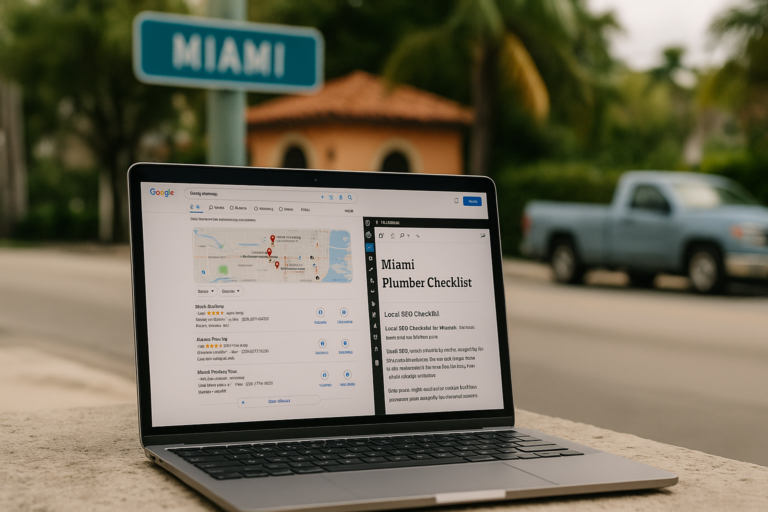
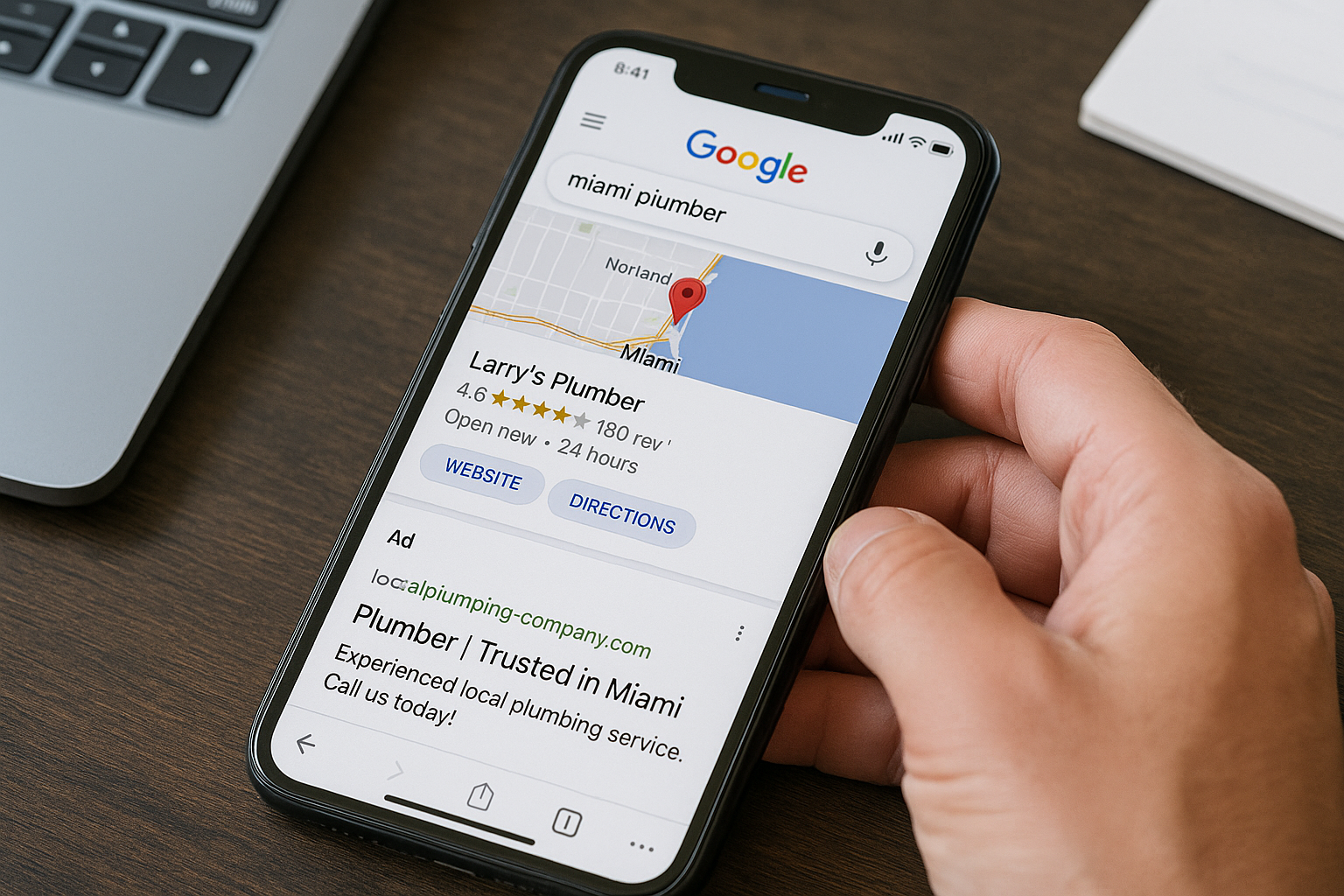
Google Business Profile helps a business appear when people search for nearby services, categories, or brand names. For example, if someone searches for a plumber in Miami, family dentist in Coral Gables, or hair salon near Brickell, Google may show a local map pack before standard website results. Those listings often pull information directly from Google Business Profile.
This visibility can lead to actions such as phone calls, direction requests, website visits, and message inquiries. For many small businesses, this listing is one of the first things a customer sees.
What a strong profile includes
A complete and accurate profile usually includes the business name, primary category, secondary categories when relevant, address or service area, phone number, business hours, website link, photos, services, and a well-written business description. Ongoing management matters too. Updates, fresh photos, accurate seasonal hours, and thoughtful responses to reviews can improve how trustworthy and useful the listing appears.
What Google Business Profile does not do
It does not replace a website. It also does not provide the same level of control, depth, or long-term content value that a website offers. A profile can help you appear in map results, but it cannot fully explain your services, build out detailed city pages, publish educational content, or capture all the organic search opportunities a website can.
It is also not a paid advertising system. While profile optimization may improve your visibility in local results, it does not work like Google Ads where you pay for placement.
Best use cases
Google Business Profile is especially useful for businesses that depend on local intent, such as contractors, home service providers, attorneys, medical practices, restaurants, salons, repair companies, fitness studios, and retail stores. If a person wants to find a trusted local option quickly, the profile plays a major role.
What local SEO does
Local SEO for small business websites focuses on improving organic search visibility for location-based searches. Instead of relying only on your Google listing, local SEO helps your actual website rank for the services and locations that matter to your business.
Its main job: strengthen organic visibility and website authority
Local SEO helps search engines understand what your business does, where you work, and why your website is relevant for local users. This can help your pages appear in traditional organic results when people search for specific services in Miami or nearby areas.
For example, a business may want to rank for searches such as “roof repair Miami,” “wedding photographer Miami Beach,” “accountant in Doral,” or “website design for small business Miami.” These searches often lead users to websites rather than map listings alone, especially when they want to compare providers, read more, and make a more informed decision.
What local SEO usually includes
Local SEO often involves a mix of technical, on-page, and off-page improvements. Common elements include:
- Clear service pages and location-relevant website content
- Optimized title tags, meta descriptions, headings, and internal links
- Fast, mobile-friendly website performance
- Accurate business information across the website and local directories
- Structured data where appropriate
- Strong navigation and user experience
- Locally relevant content that matches real search intent
- Review signals and local citation consistency
A small business website that is well organized and useful gives search engines more confidence about the business and gives users more reasons to convert.
What local SEO does not do
It does not produce instant results. Organic growth usually takes time because rankings depend on competition, website quality, content strength, relevance, and trust signals. Local SEO is also not the same as simply adding a city name to a page. Effective optimization requires structure, substance, and a good understanding of how people search.
It also does not guarantee map rankings on its own. While website strength can support local visibility overall, Google Business Profile has its own ranking factors for local pack results.
Best use cases
Local SEO is a strong fit for businesses that want steady long-term growth, stronger website performance, and better visibility across multiple service-related searches. It is especially important for businesses with more than one service, more than one service area, or a longer customer decision process.
In a competitive market like Miami, local SEO can help a business move beyond depending only on referrals or a single listing. It builds a more durable digital presence over time.
What Google Ads does
Google Ads for service businesses Miami can put your business in front of potential customers almost immediately through paid search placements. Instead of waiting for organic rankings to improve, a business can bid on selected keywords and show ads to users searching for those terms.
Its main job: immediate, controllable paid visibility
Google Ads is useful when a business wants faster exposure, more lead opportunities, or stronger visibility for high-intent searches. If someone searches for an urgent service, a paid ad can place your business near the top of the results page, above many organic listings.
This can be especially valuable for businesses where timing matters, such as emergency repairs, legal consultations, seasonal services, or competitive local categories where organic rankings take time to build.
What Google Ads usually includes
A well-run campaign generally involves choosing target keywords, defining service areas, writing ad copy, creating landing pages, setting budgets, and tracking conversions such as form submissions or phone calls. It also requires ongoing management. Campaigns need regular review to improve search term quality, ad relevance, bidding, location targeting, and landing page performance.
Because Miami is a diverse and fast-moving market, targeting matters. A business may need different messaging or service emphasis depending on the audience, neighborhood, or search intent.
What Google Ads does not do
It does not create lasting organic rankings. Once a campaign stops, the visibility from paid ads stops as well. It also does not fix weak website content or poor conversion experience. If users click an ad and land on a page that is slow, unclear, or untrustworthy, the campaign can become inefficient.
Google Ads also requires budget discipline. A campaign without good targeting or tracking can spend money quickly without producing meaningful results.
Best use cases
Google Ads is often a strong fit for businesses that need leads now, are launching a new service, are entering a competitive local market, or want to test which services and keywords generate demand. It can also help fill gaps while local SEO is still maturing.
Google Business Profile vs local SEO vs Google Ads: the practical difference
When comparing Google Business Profile vs local SEO vs Google Ads, it helps to think in terms of role, speed, and visibility type.
Google Business Profile
- Focuses on map and local pack visibility
- Best for nearby and branded searches
- Useful for calls, directions, and quick trust signals
- Supports local discovery without direct ad spend
Local SEO
- Focuses on ranking your website in organic search
- Best for long-term visibility across many service keywords
- Useful for education, comparison, and deeper service content
- Builds authority over time
Google Ads
- Focuses on paid search placements
- Best for immediate visibility and lead generation
- Useful for high-intent terms and competitive categories
- Works as long as budget and campaign quality support it
In simple terms, Google Business Profile helps people find your listing locally, local SEO helps them find your website organically, and Google Ads helps you buy targeted visibility when needed.
How they work together in a Miami local marketing strategy
The strongest Miami local marketing strategy is often not choosing one channel and ignoring the others. Instead, it is using each channel for what it does best.
Example: a home service company
A home service business in Miami might use Google Business Profile to attract nearby searchers looking for fast answers, local SEO to rank service pages for specific offerings and neighborhoods, and Google Ads to generate leads for high-value or urgent jobs. The profile supports trust and quick actions, the website captures broader search demand, and ads create faster reach when needed.
Example: a professional service firm
A law office, accounting firm, or consulting practice may depend heavily on local SEO because clients often research before reaching out. Google Business Profile still matters for local credibility and branded search presence, while Google Ads can help capture competitive search terms or promote a particular service line.
Example: a retail or appointment-based business
A salon, studio, clinic, or specialty retail store can benefit from all three as well. Map visibility can drive in-person visits, website SEO can support service and location-based searches, and ads can promote seasonal offers, new services, or peak booking periods.
How to decide where to start
Not every small business begins at the same point. A realistic strategy depends on current assets, budget, competition, and urgency.
Start with Google Business Profile if
- Your profile is incomplete, unverified, or outdated
- You depend on calls, directions, or local discovery
- You serve a defined area and want stronger map visibility
This is often a foundational step because it affects how your business appears across Google Maps and local search features.
Start with local SEO if
- Your website is thin, outdated, or not ranking well
- You want long-term growth from organic traffic
- You offer multiple services or target multiple Miami-area locations
This is especially important when your website needs to become a stronger sales and visibility asset.
Start with Google Ads if
- You need leads quickly
- You are in a competitive category where organic growth will take time
- You want to test demand for services, keywords, or locations
Ads can create momentum, but they work best when paired with strong landing pages and reliable conversion tracking.
Important considerations for Miami small businesses
Mobile experience matters
Many local searches happen on phones. Your business listing, website pages, contact buttons, forms, and landing pages should all work smoothly on mobile devices. A poor mobile experience can reduce the value of both local SEO and paid traffic.
Neighborhood and service-area relevance matters
Miami search behavior is often highly localized. People may search by neighborhood, city, or service area depending on the business type. Content and targeting should reflect how customers actually describe where they are and what they need.
Consistency matters
Your business information should be accurate and consistent across your website, Google Business Profile, and other online listings. Inconsistent names, addresses, phone numbers, or service details can create confusion for both users and search engines.
Reputation matters
Reviews do not belong to just one channel. They influence trust across local search, map listings, and paid campaigns. A business that responds professionally and keeps its information current often appears more credible to potential customers.
Tracking matters
If you do not measure calls, form submissions, direction requests, and landing page performance, it becomes much harder to know which marketing effort is producing results. A smart local strategy includes clear tracking so decisions can be based on evidence rather than guesswork.
Common mistake: treating these channels as substitutes
One of the biggest mistakes small businesses make is assuming that one channel eliminates the need for the others. A Google Business Profile does not replace a website. SEO does not create instant lead flow like paid search can. Google Ads does not build long-term organic authority. Each channel has strengths, limits, and timing differences.
Another common mistake is investing in visibility without investing in the destination. Whether a person finds you through maps, organic search, or ads, they still need a reason to trust your business and take action. Clear service information, strong design, easy navigation, and a straightforward contact path all matter.
Building a balanced strategy over time
For many small businesses, the best path is phased rather than all-at-once. A company might first clean up and optimize its Google Business Profile, then strengthen website structure and local SEO, and then add Google Ads for selected services or high-intent campaigns. Another business might begin with ads because it needs immediate lead flow, while also improving its website so paid traffic converts better and future SEO has a stronger foundation.
The right sequence depends on goals, but the long-term advantage comes from balance. Businesses that combine local discoverability, strong organic content, and paid flexibility are usually better positioned than those relying on only one source of visibility.
Conclusion
For a Miami small business, Google Business Profile, local SEO, and Google Ads are not competing versions of the same tactic. They are three different tools that support visibility in different ways. Google Business Profile helps you appear in local map-based searches and encourages fast actions like calls and direction requests. Local SEO for small business websites helps your website rank organically for the services and locations you want to be known for. Google Ads for service businesses Miami creates paid visibility when speed, competition, or strategic targeting make that useful.
When business owners understand the practical difference between Google Business Profile vs local SEO vs Google Ads, they can make better marketing decisions and avoid wasting effort on the wrong channel at the wrong time. In a competitive market like Miami, the most effective approach is usually not choosing only one. It is building a strategy where each tool supports a specific goal, fits the customer journey, and contributes to a stronger overall local presence.