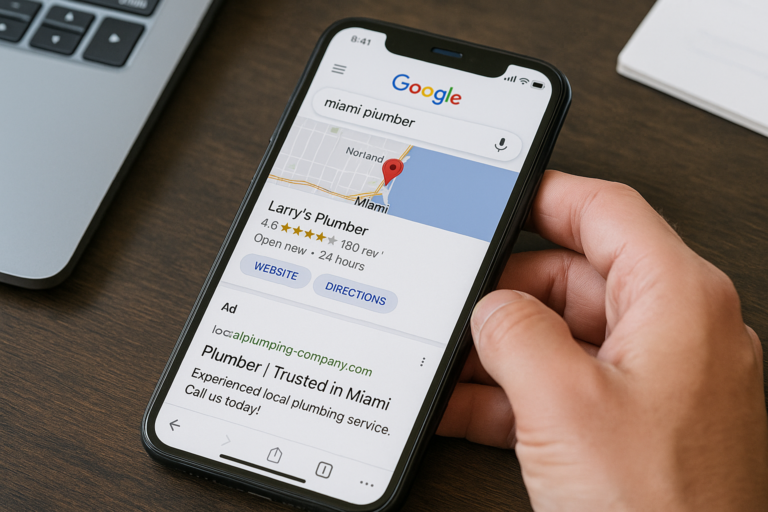
Local search is often where service businesses win or lose attention. When someone in Miami needs a plumber, attorney, cleaning company, landscaper, consultant, contractor, or repair service, they usually start with Google. They compare map listings, read service pages, scan reviews, and look for signs that a business is active, trustworthy, and nearby.
For small businesses running on WordPress, local SEO is not just about adding a city name to a homepage. It is about building a consistent local presence across your website, your Google Business Profile, your core business information, and the signals that help search engines connect your company to the areas you serve.
This practical local SEO checklist for Miami service businesses using WordPress is designed to help you focus on the tasks that matter most. Whether you serve one neighborhood or multiple areas across Miami-Dade, the goal is the same: make it easier for local customers to find you, understand what you do, and take the next step.
Why Local SEO Matters for Miami Service Businesses
Miami is a competitive market with a wide mix of neighborhoods, languages, and service needs. Customers may search by city, neighborhood, urgency, or specific service type. One person might search for “AC repair in Miami,” while another searches for “emergency electrician Brickell” or “house cleaning Coral Gables.”
That means your WordPress site should support local relevance in a clear, structured way. A strong local SEO setup can help your business:
- Appear more often in location-based searches
- Strengthen visibility in Google Maps and local results
- Improve trust through consistent business information
- Generate better leads from people in your service area
- Support long-term traffic growth without relying only on ads
The checklist below focuses on practical actions, not shortcuts. Good local SEO takes consistency, accurate information, and useful content.
1. Make Sure Your Core Business Information Is Consistent
Before adjusting pages or plugins, start with the foundation: your business name, address, phone number, website URL, and service area details. Search engines look for consistency across your website and business listings.
What to check
- Your business name is written the same way everywhere
- Your phone number matches across your website and profiles
- Your address is accurate if you serve customers from a physical location
- Your hours are current
- Your website URL is correct and secure with HTTPS
If you are a service-area business and do not want to publicly emphasize a storefront address, be careful that your contact information still aligns with how your business is represented elsewhere. Inconsistent details can weaken local trust signals.
WordPress tip
Add your business information in your footer, contact page, and any relevant schema or local SEO settings. This helps both users and search engines confirm who you are and where you operate.
2. Set Up or Refine Your Google Business Profile
Your Google Business Profile is one of the most important local SEO assets for a service business. It plays a major role in map visibility and can influence whether someone contacts you without even visiting your website.
Checklist for your profile
- Use your real business name
- Choose the most accurate primary category
- Add relevant secondary categories where appropriate
- Write a clear business description
- Include your services
- Keep hours updated, including holiday changes
- Add quality photos of your work, team, vehicles, office, or service process
- Set your service areas accurately
- Link to the most relevant page on your WordPress site
For many Miami service businesses, the connection between Google Business Profile and WordPress SEO is critical. If your profile says one thing and your site says another, that creates confusion. Make sure your categories, services, and service areas align with your key pages.
Example
If your profile highlights water damage restoration, your site should have a well-optimized page for that service, not just a general services list. Relevance works best when your profile and website support each other.
3. Use a Reliable WordPress SEO Plugin
WordPress makes local optimization easier when you use a solid SEO plugin. The plugin itself does not create rankings, but it helps you manage important technical and on-page elements efficiently.
Use your plugin to manage
- SEO titles and meta descriptions
- XML sitemaps
- Canonical settings
- Schema markup support
- Indexing controls for thin or duplicate pages
Choose one plugin and configure it properly rather than stacking multiple SEO tools that overlap. Too many plugins can create conflicts or clutter your workflow.
Important consideration
A plugin helps structure your SEO work, but local rankings still depend on content quality, technical health, profile optimization, and real local relevance. Do not treat plugin settings as a complete strategy.
4. Optimize Your Homepage for Local Intent
Your homepage should immediately explain what you do and where you do it. This is one of the simplest but most overlooked Miami service business SEO tips.
Include on the homepage
- A clear headline describing your main service
- A mention of Miami or your primary service area where natural
- A short summary of your key services
- Trust-building details such as years in business, process clarity, or service specialization if accurate
- Internal links to major service and location pages
A homepage does not need to target every neighborhood. Its job is to establish your main business offering and primary market while directing users deeper into the site.
Example structure
A cleaning company might lead with residential and commercial cleaning in Miami, then link to deeper pages for move-out cleaning, office cleaning, and recurring cleaning. This gives both users and search engines a logical path.
5. Build Strong Service Pages
Many service businesses rely too heavily on a single generic services page. A better approach is to create dedicated pages for your major service categories.
Each service page should include
- A focused page title
- A clear explanation of the service
- Who the service is for
- Common problems it solves
- What the process typically involves
- Relevant service-area references where natural
- Internal links to related services and contact pages
This helps your site match more specific searches. Someone searching for “drain cleaning Miami” is more likely to convert on a focused drain cleaning page than on a broad plumbing overview page.
Avoid thin pages
Do not create dozens of near-duplicate pages with only city names swapped out. If you build service pages or area pages, each one should offer distinct and useful content.
6. Create Location Pages Carefully
If your business serves multiple parts of Miami or surrounding areas, location pages can be helpful when done well. The key is to make them genuinely useful, not repetitive.
Good location page elements
- The area or neighborhood name in the heading and title tag
- The services offered in that location
- Specific notes about service availability or common local needs
- Driving factors that matter to customers, such as response area or appointment coverage
- Internal links back to core service pages
For example, a roofing company might create separate pages for Miami, Coral Gables, Kendall, and Doral if each page includes meaningful local context and relevant service details.
Important consideration
If you only have time to do a few pages well, start with your top service areas. Quality is more valuable than quantity.
7. Improve On-Page SEO Basics
Strong local SEO also depends on clear on-page structure. This is where WordPress local SEO for small business sites can make a real difference with consistent editing and formatting.
Review these basics on key pages
- Unique title tags with the main service and location intent where relevant
- Compelling meta descriptions that encourage clicks
- One clear H2 and H3 structure for readability
- Natural use of location terms, not keyword stuffing
- Descriptive image alt text
- Short, readable URLs
For example, a title like “Water Heater Repair in Miami | Brand Name” is clearer than a vague title like “Home.” Small adjustments like this improve topical clarity.
8. Add Local Business Schema
Schema markup helps search engines better understand your business details. Many SEO plugins or schema plugins can help with this in WordPress.
Useful schema details may include
- Business name
- Address
- Phone number
- Hours
- Website URL
- Business type
- Service area where supported
Schema does not guarantee rankings, but it can improve clarity and support how your business information is interpreted.
Be accurate
Only mark up information that is visible and correct. Structured data should reflect the real business details shown on your site.
9. Strengthen Internal Linking
Internal links help users navigate your site and help search engines understand page relationships. They are especially important on service business websites that may otherwise stay small and flat.
Practical internal linking ideas
- Link from the homepage to top service pages
- Link from service pages to relevant location pages
- Link blog posts to service pages where helpful
- Link contact and estimate request pages from major conversion pages
If you publish educational content such as maintenance tips or seasonal service advice, use those posts to support your commercial pages with natural internal links.
10. Make Sure Your Site Works Well on Mobile
Many local searches happen on phones. If your WordPress site loads slowly, has hard-to-tap buttons, or hides key information, users may leave before contacting you.
Mobile checklist
- Fast loading pages
- Readable font sizes
- Tap-friendly buttons
- Visible phone number and contact options
- Clean forms that are easy to complete
- No intrusive popups blocking content
A mobile-friendly site supports both rankings and conversions. In local SEO, visibility and usability are tightly connected.
11. Improve Site Speed and Technical Health
Technical issues can hold back an otherwise strong local SEO campaign. WordPress sites especially benefit from routine performance and maintenance checks.
Review these technical areas
- Use quality hosting
- Compress and properly size images
- Keep themes and plugins updated
- Fix broken links
- Ensure pages return the correct status codes
- Use caching where appropriate
- Keep your XML sitemap current
If your site has duplicate pages, thin tag archives, or outdated service pages, clean them up. Technical clutter can dilute the strength of your important pages.
12. Earn and Manage Reviews Thoughtfully
Reviews are a major local trust signal. They also influence how potential customers perceive your business when comparing options in search results.
Good review practices
- Ask satisfied customers for honest feedback
- Make the review process easy
- Respond professionally to reviews when appropriate
- Watch for recurring service themes in customer feedback
Do not fabricate reviews or pressure people into using certain wording. Focus on real customer experiences. Over time, authentic reviews can support both click-through rate and conversion confidence.
How reviews help your WordPress SEO strategy
Even though many reviews live on third-party platforms, they reinforce the trust signals around your brand. You can also use real customer feedback themes to improve your website copy, service descriptions, and content topics.
13. Build Local Citations and Directory Consistency
Citations are mentions of your business information on directories, local listings, and relevant platforms. Consistency matters more than volume.
Focus on
- Major business directories
- Industry-relevant platforms
- Local chambers or community organizations when applicable
- Accurate NAP details across listings
If older listings show outdated phone numbers, old addresses, or misspelled business names, correct them. Conflicting citations can create local SEO confusion.
14. Publish Useful Local Content
Blog content can support local SEO when it is tied to real customer needs. The goal is not to publish generic filler. The goal is to answer questions and address situations your local audience actually faces.
Content ideas for Miami service businesses
- Seasonal maintenance tips relevant to South Florida conditions
- Service preparation guides
- Common property issues in humid or coastal environments
- Neighborhood-specific service considerations when relevant
- Step-by-step explanations of your service process
For example, an HVAC company might publish content about preparing cooling systems for long hot seasons. A landscaping company might write about plant care and drainage considerations in Miami yards. Helpful content can attract searches earlier in the decision process and support your commercial pages through internal linking.
15. Track the Right Local SEO Signals
You do not need to overcomplicate reporting, but you do need visibility into whether your local SEO work is helping.
Track items such as
- Organic traffic to service and location pages
- Clicks from Google Business Profile
- Phone calls or form submissions from organic visitors
- Search queries in Google Search Console
- Top landing pages for local traffic
- Map visibility trends where available through your tools
Look for patterns, not just isolated ranking changes. If a page gets impressions but few clicks, improve the title and meta description. If traffic grows but leads do not, review the page experience and calls to action.
16. Keep Your WordPress Site Maintained
Local SEO is not a one-time setup. Service businesses change hours, add services, update service areas, and refresh images. A neglected site can gradually lose relevance and trust.
Ongoing maintenance checklist
- Update service pages when offerings change
- Refresh outdated local references
- Check contact forms regularly
- Replace low-quality or old images when needed
- Review plugin and theme updates
- Audit broken links and indexing issues
This matters because users and search engines both prefer accurate, current information. A maintained website is more credible than one that looks abandoned.
Common Local SEO Mistakes to Avoid
Even businesses with a decent website can hold themselves back with a few avoidable mistakes.
Watch out for these issues
- Using the same copy across multiple city pages
- Stuffing Miami or neighborhood names into every sentence
- Ignoring mobile usability
- Letting your Google Business Profile go stale
- Publishing very thin service pages
- Having inconsistent contact information across platforms
- Neglecting technical maintenance on WordPress
Local SEO works best when your site is useful first and optimized second. If a page exists only for search engines and adds no value for customers, it is probably not helping enough.
Putting This Local SEO Checklist Into Action
If this list feels long, start with the items that have the strongest immediate impact:
- Clean up your business information
- Improve your Google Business Profile
- Optimize your homepage and top service pages
- Build or refine your core location pages
- Fix mobile and technical issues
- Maintain a steady review and content process
That sequence usually gives Miami service businesses a practical path forward without trying to do everything at once. As the foundation improves, the smaller optimizations become more effective.
Conclusion
A practical local SEO checklist for Miami service businesses using WordPress should focus on clarity, consistency, and usefulness. Strong local visibility is built by aligning your website, your Google Business Profile, your service pages, your location signals, and your technical setup. When those pieces work together, your business is better positioned to appear in local searches and convert that visibility into real inquiries.
For small business owners, the most important takeaway is this: local SEO is not about tricks. It is about making it easy for both search engines and potential customers to understand who you are, what you offer, and where you work. If you keep your WordPress site accurate, locally relevant, and well maintained, you create a stronger foundation for sustainable local growth in a competitive market like Miami.