Choosing the right website platform can shape how easily your business attracts leads, updates content, ranks in search, and grows over time. For many owners, the decision often comes down to two popular options: Wix and WordPress with Elementor.
If you are comparing Elementor vs Wix for small business websites, the best choice depends less on which platform is more popular and more on what your business actually needs. A local service company may want strong SEO control and room to expand. A newer business may want a faster setup with fewer technical decisions. A company planning a website redesign platform choice may need to think about long-term flexibility rather than just launch speed.
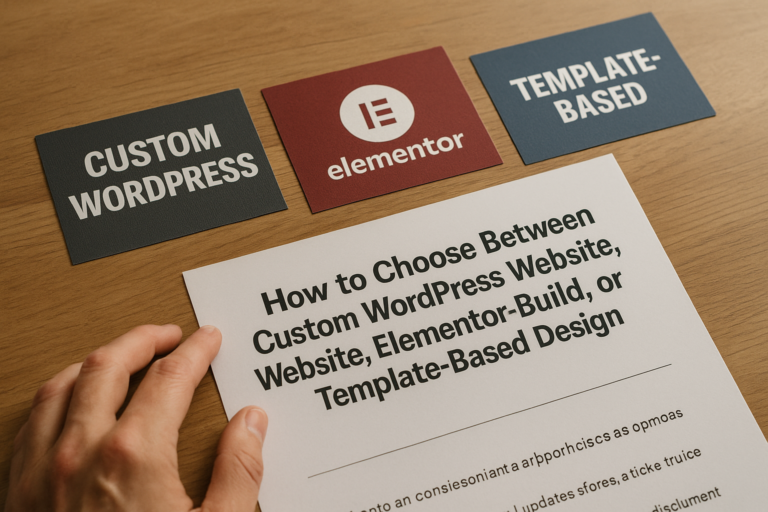
Both platforms can help a small business publish a modern site. Both offer visual editing, templates, and tools that make website creation more accessible. But they are built on very different foundations. Wix is an all-in-one hosted platform. Elementor is a visual builder used with WordPress, which gives you more control over structure, plugins, hosting, and future customization.
In this guide, we will break down the key differences in a practical way, so you can decide which option better supports your goals, budget, marketing strategy, and future growth.
Understanding the Core Difference
Before comparing features, it helps to understand the basic setup of each platform.
What Wix Is
Wix is a hosted website builder. That means it includes the editor, hosting, security, and platform management in one system. You sign up, choose a template, customize pages, and publish within the Wix ecosystem. This simplicity is one of the main reasons small businesses consider it.
Wix is designed to reduce technical complexity. Many business owners like that there are fewer setup decisions to make. You do not need to separately choose hosting, install themes, or manage a wider plugin environment.
What Elementor Is
Elementor is a visual page builder for WordPress. WordPress is the content management system, and Elementor adds drag-and-drop design control on top of it. With this setup, your website runs on WordPress, while Elementor helps build the layout and page experience.
This difference matters. When comparing WordPress vs Wix for business, WordPress generally offers more flexibility and ownership, while Wix offers more simplicity and a more closed environment.
Elementor is not a complete platform by itself. It works as part of a WordPress website, which means your overall site performance and capabilities also depend on hosting, plugins, theme choices, and site management.
Ease of Use for Small Business Owners
Ease of use is often the first thing business owners care about, especially if they plan to update the site themselves.
Wix: Faster Learning Curve
Wix is often easier for beginners to understand right away. The dashboard is built for non-technical users, and most core features are integrated. If your goal is to launch a basic website quickly with standard pages, Wix can feel straightforward.
For example, a solo consultant or a new local business that only needs a home page, services page, about page, and contact form may appreciate Wix’s guided setup and simplified editing.
Elementor: More Flexible, Slightly More Involved
Elementor is also visual and beginner-friendly, but it usually comes with more decisions. You are working inside WordPress, so menus, settings, plugins, and theme structure can feel more layered than Wix. Once set up properly, however, Elementor can be very efficient for editing content, creating landing pages, and building custom layouts.
For businesses that want more than a basic brochure site, that extra flexibility often becomes a major advantage.
In a simple Elementor website builder comparison, Wix tends to win on immediate simplicity, while Elementor often wins on long-term control.
Design Freedom and Branding Control
Most small businesses do not just want a website that works. They want a website that reflects their brand and helps them stand out in a competitive market.
Wix Design Capabilities
Wix provides many templates and visual design tools. You can create attractive pages without writing code, and the platform is capable of supporting a polished look for many small business websites.
However, Wix can feel more limiting when you want very specific layout behavior, deeper customization, or a more scalable design system across many pages. It works well when your needs fit the builder’s structure, but less well when your design goals become more custom.
Elementor Design Capabilities
Elementor gives businesses much more control over page structure, spacing, reusable sections, responsive behavior, and visual consistency. Combined with the broader WordPress ecosystem, Elementor makes it easier to create a custom site that feels less template-driven.
This is especially useful during a redesign. If your current website feels dated, inconsistent, or difficult to update, Elementor can offer a stronger path for rebuilding with a custom user experience in mind.
For a business evaluating a website redesign platform choice, Elementor often makes more sense when branding and custom functionality are important priorities.
SEO and Local Search Potential
For many owners, the real question is not which platform looks better. It is which platform helps customers find the business online.
When evaluating the best website platform for local business, SEO control matters. That includes page titles, meta descriptions, heading structure, internal linking, content organization, image optimization, page speed, schema possibilities, local landing pages, and blog support.
Wix SEO Strengths
Wix has improved its SEO features over time. It allows users to edit important on-page elements such as titles, descriptions, and URLs. For a basic business website with a limited number of pages, Wix can absolutely support fundamental SEO work.
If your business is in a less competitive niche and your website strategy is relatively simple, Wix may provide enough SEO capability to serve your needs.
WordPress and Elementor SEO Strengths
WordPress is widely valued for SEO flexibility. With Elementor on top of WordPress, businesses can create optimized page structures while also using SEO tools, schema plugins, caching tools, image optimization tools, and blogging workflows that support deeper search strategies.
This matters for local service businesses that want to target multiple service pages, location pages, blog topics, and conversion-focused landing pages. WordPress also tends to offer more freedom in how technical SEO and content strategy are implemented over time.
If local visibility is a major goal, the WordPress vs Wix for business decision often leans toward WordPress with Elementor because it supports a more scalable SEO foundation.
Blogging and Content Marketing
Small business websites are no longer just digital brochures. Many companies use blog content to answer customer questions, improve search visibility, and build authority.
Wix for Content Publishing
Wix includes blogging tools that are suitable for straightforward publishing. If your plan is to post occasional updates or a modest number of articles, it can work well enough.
But if content marketing is central to your strategy, Wix may start to feel less robust over time compared to WordPress.
Elementor and WordPress for Content Growth
WordPress began as a publishing platform, and that history still shows in its content management strengths. Organizing categories, managing large amounts of content, using SEO plugins, and structuring internal links is generally easier and more scalable in WordPress.
Elementor also helps turn standard content into more engaging page layouts. For example, a local business can create service pages supported by blog articles, lead magnets, testimonials, and location-specific landing pages without being boxed into a limited structure.
If content is part of your long-term marketing plan, Elementor with WordPress usually offers the stronger framework.
Scalability and Future Growth
A website platform should not only fit your business today. It should also support what you may need next year.
When Wix Fits
Wix can be a solid fit for businesses with simple needs and limited complexity. If you want a site that is easy to launch and maintain with relatively standard functionality, Wix can be a practical choice.
Examples include:
- A new business validating its first online presence
- A local professional needing a small brochure site
- A business with minimal content and few expansion plans
When Elementor Fits Better
Elementor is often better for businesses that expect their website to evolve. That might include adding new service pages, building landing pages for ads, integrating booking tools, expanding blog content, improving SEO structure, or redesigning sections without rebuilding the entire site.
Examples include:
- A home service business targeting multiple service areas
- A growing company investing in search and lead generation
- A business planning a redesign with stronger branding
- A company that may need advanced forms, integrations, or custom features later
In other words, Elementor often provides more room to grow without outgrowing the platform itself.
Ownership, Portability, and Long-Term Control
This is one of the most important differences, yet many small businesses do not think about it until later.
Wix as a Closed Ecosystem
Wix keeps everything within its platform. That convenience has benefits, but it also means your website is more tied to their system. If you want to move your site to a different environment in the future, the process is not as simple as picking up the same website and transferring it elsewhere.
For some businesses, this is not a major concern. For others, it becomes a limitation when the business grows or the site needs more custom development.
WordPress and Elementor Ownership Advantages
WordPress gives businesses more control over their site environment, files, hosting choices, and tools. You can change hosts, adjust plugins, refine performance strategy, and generally maintain more ownership over how the website operates.
If your website is a serious business asset rather than just an online placeholder, this level of control can be very valuable.
Maintenance and Technical Responsibility
Every platform has tradeoffs, and this is where Elementor and Wix differ clearly.
Wix: Lower Technical Management
With Wix, the platform handles hosting and many core technical responsibilities. That can reduce the burden on business owners who do not want to think about updates or infrastructure.
This convenience is appealing for time-strapped owners who want fewer moving parts.
Elementor and WordPress: More Responsibility, More Freedom
With WordPress and Elementor, maintenance matters more. Plugin updates, security practices, hosting quality, backups, and performance optimization all play a role in how the site performs.
That does not make Elementor a poor choice. It simply means the platform rewards proper setup and ongoing care. For businesses that work with a qualified web partner or have a maintenance plan, this tradeoff is often worthwhile because of the extra flexibility and control they gain.
Performance Considerations
Website speed and user experience affect both conversions and SEO.
Wix Performance
Wix handles the hosting environment for you, which can simplify performance management. For standard websites, that can be helpful. But because you are working within a closed system, your ability to deeply optimize performance is more limited.
Elementor Performance
Elementor performance depends heavily on how the website is built. A well-structured WordPress site with good hosting, optimized images, sensible plugin use, and thoughtful page design can perform very well. A poorly built site can become slow.
This is another reason the platform decision should not be based on the builder alone. With Elementor, execution matters. The upside is that you usually have more ways to improve performance if needed.
Ecommerce and Business Functionality
Some small businesses only need lead generation, while others need online sales, bookings, memberships, or customer portals.
Wix Business Features
Wix offers built-in tools and apps that can support online business functions. For simple ecommerce or bookings, it may be enough for many small operations.
It works best when your required features align with what Wix already provides.
Elementor and WordPress Business Features
With WordPress, the range of possible features is broader. Elementor can be used alongside plugins and integrations that support ecommerce, forms, automation, membership systems, CRM connections, event management, and more.
That does not automatically mean every business needs WordPress. But if your site must do more than display information, a WordPress setup is often more adaptable over time.
Which Platform Is Better for a Website Redesign?
If your business already has a website and is planning a redesign, the choice often comes down to what you are trying to fix.
Choose Wix for a Simpler Reset
If your current website is outdated and you mainly want a cleaner design with basic pages and less technical responsibility, Wix may be a reasonable fresh start.
This is especially true if your marketing strategy is simple and your website’s role is mainly credibility, contact information, and a small set of services.
Choose Elementor for a Strategic Rebuild
If the redesign is about more than appearance, Elementor is often the stronger option. It is better suited to businesses that want to improve lead generation, create stronger service pages, build content around SEO, and develop a site structure that can expand with the business.
For many companies, a redesign is really a business growth project. In that case, a more flexible foundation can make a major difference.
How to Decide Based on Your Goals
If you are still deciding between Elementor and Wix, focus on your actual business priorities rather than generic feature lists.
Wix May Be Right If You Want:
- A quicker and simpler launch process
- Fewer technical decisions
- A small website with standard pages
- An all-in-one platform with lower management demands
Elementor May Be Right If You Want:
- More control over design and branding
- A stronger long-term SEO and content strategy
- Scalability for growth, redesigns, and new features
- Greater ownership and flexibility within WordPress
- A more adaptable foundation for lead generation
For many businesses comparing Elementor vs Wix for small business websites, the decision comes down to simplicity versus flexibility. Wix is easier to start. Elementor is often stronger to grow with.
Conclusion
There is no single best platform for every company. The right choice depends on your business stage, marketing goals, content needs, and how much control you want over your website in the long run.
Wix is a practical option for small businesses that want a straightforward website with minimal technical involvement. It can work well for simple sites and businesses that value convenience above customization.
Elementor, used with WordPress, is usually the better fit for businesses that see their website as a long-term marketing asset. It offers stronger flexibility for SEO, branding, redesigns, content growth, and feature expansion. If your website needs to support lead generation, local search visibility, and future development, Elementor often provides the stronger foundation.
When making your website redesign platform choice, think beyond launch day. The best platform is not just the one that gets your site online fastest. It is the one that best supports where your business is going next.