Choosing a small business website package can feel confusing, especially when pricing and deliverables vary so widely from one provider to another. Some businesses are quoted a few hundred dollars, while others are shown proposals worth several thousand. At first glance, it may seem difficult to tell what is truly necessary, what is optional, and what is simply being marked up.
The good news is that you do not need to be a web expert to make a smart decision. If you understand what your business actually needs, how website design pricing for small business typically works, and which features create real value, you can avoid overspending while still getting a professional website that supports growth.
In this guide, we will look at how to compare website packages, what affects cost, which warning signs to watch for, and how to choose an affordable business website that is built for long-term results rather than short-term shortcuts.
Why Website Packages Vary So Much
One reason business owners feel overwhelmed is that the term website package can mean very different things depending on the provider. One package may include only a basic template setup with a few pages and limited support. Another may include custom design, SEO setup, mobile optimization, copy guidance, speed improvements, security, analytics, and ongoing maintenance.
That wide range explains why pricing is rarely identical between providers. When reviewing a proposal, you are not just paying for pages. You may also be paying for strategy, design quality, technical development, scalability, marketing readiness, and post-launch support.
A lower price is not always a better deal if it leaves your business with a slow site, poor mobile experience, weak search visibility, or no one to help when issues appear later. On the other hand, a high price is not automatically justified either. The goal is to match the package to your actual business needs.
Start With Your Business Goals
Before comparing platforms, features, or prices, first define what the website needs to accomplish. A website for a local service company will have different priorities than one for a consultant, medical office, law firm, retailer, or manufacturer.
Ask yourself questions such as:
- Do I need leads, calls, form submissions, appointments, or online sales?
- How many services or product categories need to be presented?
- Do I need blog content, landing pages, or location pages in the future?
- Will staff need to update content regularly?
- Do I need integrations such as booking tools, payment systems, CRM forms, or live chat?
- How important is SEO from the beginning?
These questions help determine whether you need a simple brochure-style site or a more custom website for small business growth. Without this clarity, it is easy to pay for advanced features you will not use or choose a basic package that quickly becomes limiting.
Understand What Is Usually Included in a Website Package
A professional small business website package often combines several components. Knowing what should be included makes it easier to compare quotes fairly.
Design and Layout
This includes the visual appearance of the website, page structure, navigation, branding alignment, and mobile responsiveness. Some providers use pre-made templates with minimal changes, while others offer a more customized design process.
Page Development
Most packages include a set number of pages, such as home, about, services, contact, and a few additional internal pages. If your business needs many service pages, staff profiles, case studies, or resource sections, the page count can affect pricing.
Content Placement
Some agencies expect you to provide finalized text and images. Others help with page structure, message refinement, or content formatting. If professional copywriting is included, pricing may increase, but so can quality and conversion performance.

Mobile Optimization
Today, every business website should work smoothly on phones and tablets. Mobile responsiveness is not a premium extra. It should be a standard requirement.
Basic SEO Setup
Basic SEO often includes optimized page titles, meta descriptions, heading structure, image optimization, indexing settings, and a clean technical foundation. Full SEO campaigns are usually separate, but foundational optimization should be part of the launch process.
Performance and Security
Fast loading, plugin quality, secure setup, backups, updates, and protection against common issues matter more than many business owners realize. A cheap website that becomes slow or vulnerable can cost more later.
Training or Ongoing Support
Some packages end at launch. Others include training, post-launch edits, maintenance, and technical support. This is one of the biggest differences in value between providers.
What Actually Drives Website Design Pricing for Small Business
When people search for website design pricing for small business, they often hope for a simple fixed number. In reality, pricing depends on several variables.
Complexity
A five-page informational website is usually less expensive than a site with service categories, booking functionality, advanced forms, e-commerce, membership access, or custom integrations.
Level of Customization
A heavily customized design or functionality takes more time than adapting an existing framework. If your business needs a very distinct user experience, the investment may be higher, but it may also produce stronger branding and better usability.
Content Volume
The number of pages, amount of text, image preparation, and migration of old content all affect labor. A small site with clear messaging is faster to build than a large site requiring extensive organization.
Marketing Readiness
If the website is meant to support Google Ads, local SEO, technical SEO, or landing page campaigns, it may need stronger conversion-focused planning from day one. That adds value, not just cost.
Platform and Tools
WordPress, Elementor, WooCommerce, premium plugins, security tools, and hosting configurations can influence both initial pricing and long-term operating costs.
Ongoing Maintenance
Some businesses make the mistake of looking only at launch cost. A website also needs software updates, backups, troubleshooting, performance monitoring, and occasional content changes. Ongoing maintenance may be billed separately or bundled into a package.
How to Tell if a Website Package Is Affordable or Just Cheap
An affordable business website is not simply the lowest-priced option. It is the one that gives your business the functions, quality, and support it actually needs without unnecessary extras or hidden future costs.
Cheap websites often become expensive in less obvious ways. They may rely on bloated templates, poor code quality, too many plugins, weak security, generic content structure, or no meaningful support after launch. The site may look acceptable at first but underperform in search, load slowly, or require costly fixes later.
By contrast, an affordable solution balances cost with reliability, performance, and flexibility. It gives you a strong foundation without forcing you into enterprise-level complexity.
A good rule is to think in terms of business value. If your website helps generate inquiries, improve trust, support marketing, and reduce technical headaches, it is an asset. If it constantly needs repairs or fails to convert visitors, even a low initial price may be too much.
Choose the Right Type of Package for Your Stage of Business
Not every business needs the same website package. Your current size, goals, and growth plans matter.
Starter Websites
These are often best for new businesses, solo professionals, or companies that need a clean online presence quickly. A starter package may include essential pages, mobile-friendly design, contact forms, and basic SEO setup.
This can be the right choice if your services are straightforward and you mainly need credibility, clear information, and a simple way for customers to contact you.
Growth-Focused Websites
Businesses that are actively marketing, running ads, or competing in crowded industries usually need more than a basic template site. A growth-focused package may include stronger conversion strategy, custom layouts, service-specific pages, analytics setup, landing page planning, and more detailed SEO foundations.
This is often where a custom website for small business becomes more valuable, because the site is designed around business goals rather than just online presence.
Advanced or Feature-Rich Websites
Some companies need e-commerce, appointment systems, gated content, advanced forms, custom calculators, multilingual features, or integration with internal business tools. These websites require more planning and development and naturally cost more.
The key is to pay for this level only if your operations or customer experience truly require it.
Questions to Ask Before You Buy
One of the best ways to avoid overpaying is to ask direct, practical questions during the proposal stage.
- How many pages are included?
- Is the design custom, semi-custom, or template-based?
- Will the site be mobile-optimized and speed-conscious?
- What SEO setup is included at launch?
- Who provides content, images, and revisions?
- Are hosting, domain, premium tools, or licensing fees included?
- What happens after launch if I need updates or support?
- Will I be able to edit content myself?
- Is there a maintenance plan available?
- Are there any recurring fees I should expect?
These questions reveal whether the proposal is transparent and whether the provider is focused on your long-term success or only on the initial sale.
Red Flags That Can Lead to Overpaying
Some warning signs are obvious, while others are hidden behind polished sales language.
Vague Deliverables
If a package does not clearly explain what is included, it becomes harder to compare and easier for costs to grow later.
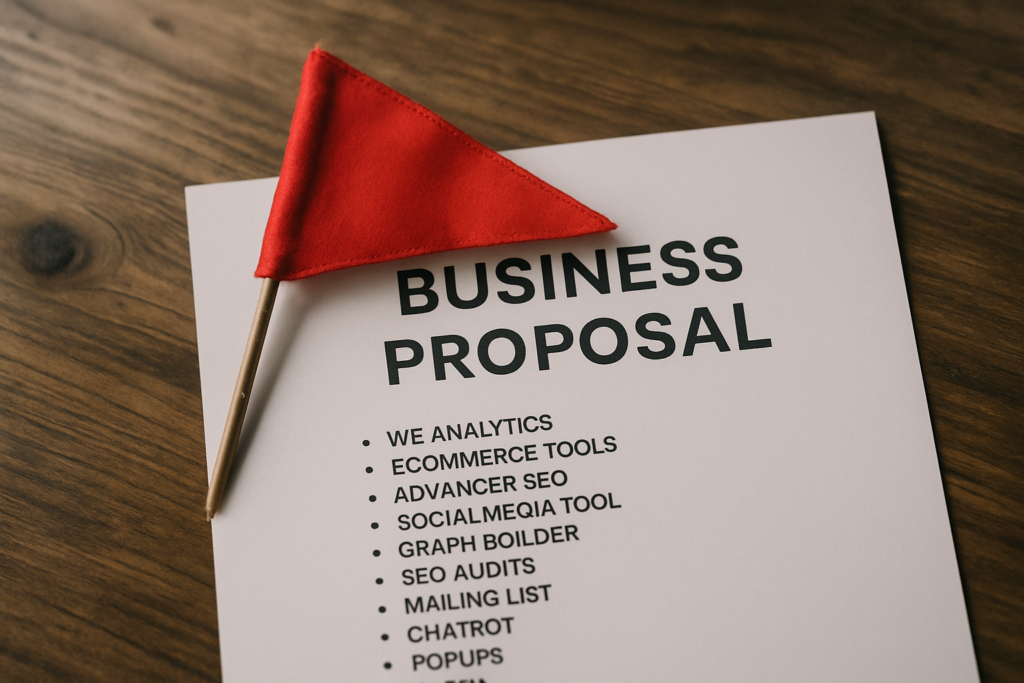
Overloaded Feature Lists
Some proposals include a long list of tools and extras that sound impressive but do not connect to your goals. More features do not automatically mean more value.
No Discussion of Support
Businesses often need help after launch. If support is unclear or unavailable, future issues can become expensive and stressful.
Very Low Pricing With Unrealistic Promises
If a provider offers custom design, full SEO, unlimited revisions, premium tools, and advanced functionality for an unusually low price, it is wise to ask how that is sustainable.
You Do Not Own or Control Key Assets
Make sure you understand who controls the domain, hosting, website files, and administrative access. Lack of ownership can create long-term dependency and unexpected costs.
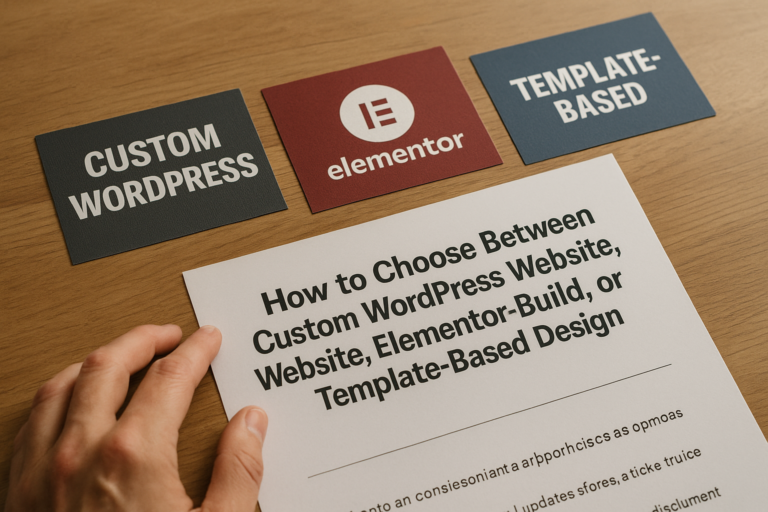
Template Website or Custom Website for Small Business?
This is one of the most important decisions when selecting a package.
A template-based website can be a practical option when your needs are simple, your timeline is short, and your budget is limited. If the template is well-built and properly customized, it can still produce a professional result.
However, a custom website for small business may be the better choice when your company has unique services, stronger branding needs, more competitive markets, or long-term growth plans. Custom development can improve usability, create clearer conversion paths, and make future expansion easier.
The right decision depends on your goals, not on which option sounds more impressive. For some businesses, a well-executed template package is enough. For others, customization prevents the need for a full rebuild later.
Do Not Ignore Long-Term Costs
One of the most common mistakes business owners make is focusing only on the launch quote. A website is not a one-time purchase that can be forgotten forever.
Over time, you may need:
- software and plugin updates
- security monitoring
- backups
- content changes
- new pages or features
- speed improvements
- technical troubleshooting
- SEO enhancements
When comparing a small business website package, look at the total cost of ownership, not just the initial build price. In many cases, a slightly higher upfront investment with better structure and support can be more cost-effective over several years.
Think About Marketing, Not Just Design
A website should not only look professional. It should also help your business generate trust and action. That means the package should support real marketing goals.
For example, if you plan to run Google Ads, your site may need stronger landing pages, clearer conversion paths, better tracking, and faster performance. If search visibility matters, the site should be built with solid technical SEO foundations. If trust is essential in your industry, design and messaging should reinforce credibility from the first few seconds.
This is why the best website packages are not purely design products. They combine design, usability, technical setup, and marketing awareness.
How to Make the Final Decision
Once you narrow down your options, compare providers based on fit rather than price alone.
Look for a package that:
- matches your current business goals
- includes the pages and features you actually need
- explains deliverables clearly
- uses reliable technology
- supports mobile performance and user experience
- includes a sound technical foundation
- offers realistic support after launch
- allows room for future growth
Also consider communication. A website project usually goes more smoothly when you work with people who understand your business, explain things clearly, and provide practical recommendations instead of pushing unnecessary extras.
Conclusion
Choosing the right small business website package without overpaying comes down to clarity, comparison, and long-term thinking. You do not need the cheapest option, and you do not need the most expensive one. You need a website solution that fits your business goals, gives you a professional online presence, and supports growth without burdening you with features you will never use.
When you understand how website design pricing for small business works, ask the right questions, and evaluate the full value of a proposal, it becomes much easier to choose with confidence. Whether you need a simple affordable business website or a more custom website for small business growth, the smartest investment is the one built around your real needs, not a generic sales package.
A well-planned website should become a dependable business tool for years to come. When chosen carefully, it can strengthen your brand, improve trust, support marketing, and help turn visitors into customers without unnecessary overspending.