For many service companies, a website starts out as an online brochure. It lists services, shows a phone number, and maybe includes a contact form. That may be enough to establish credibility, but it is not always enough to consistently generate new business. If your goal is growth, your site needs to do more than exist. It needs to actively guide visitors toward contacting you, requesting an estimate, or booking a service.
That is especially true in a competitive market like Miami. Local customers often compare multiple providers before making a decision, and they usually make that decision quickly. A strong site can help your business stand out, answer common questions, build trust, and create a smoother path from first visit to first conversation. This is the foundation of small business website lead generation in Miami.
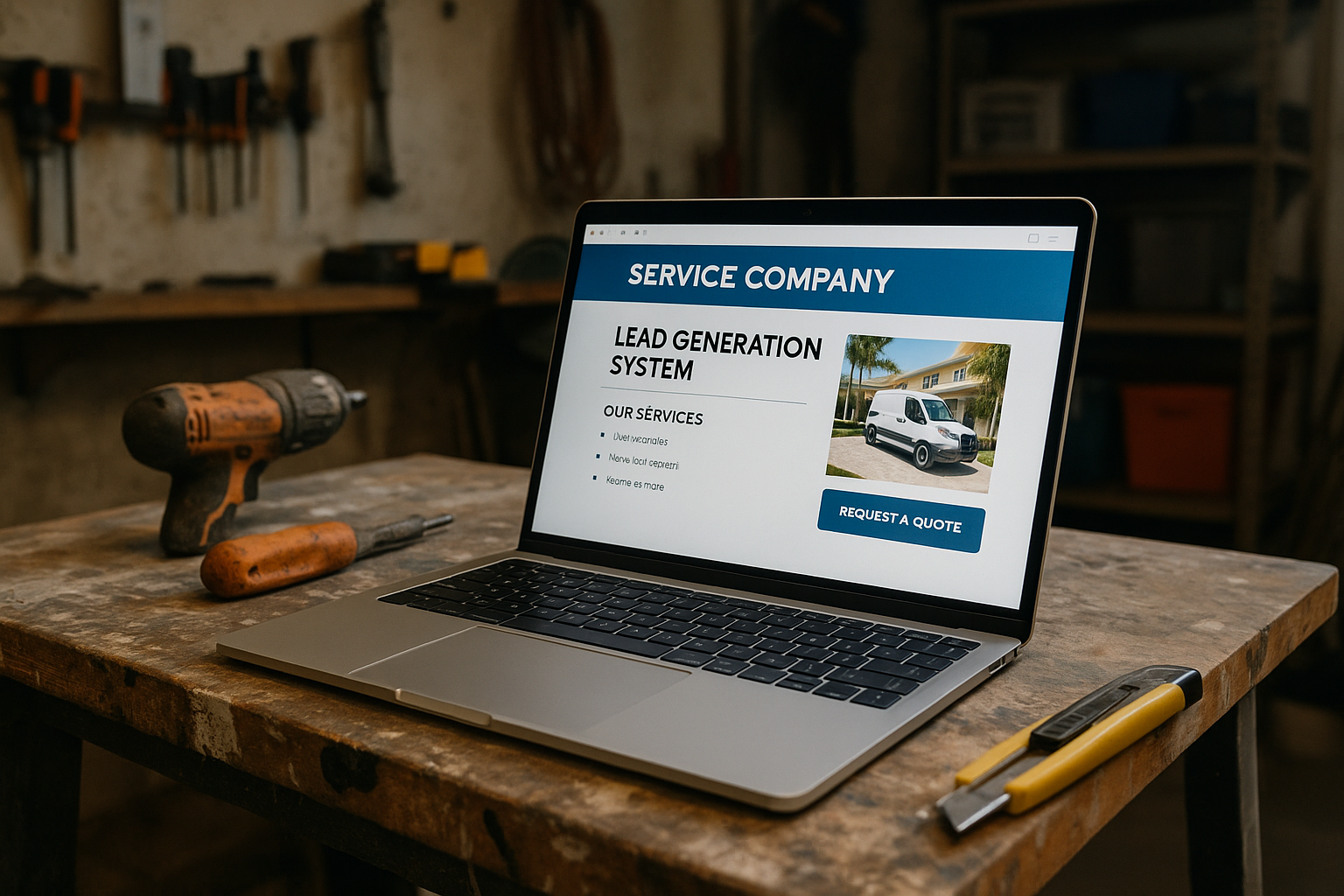
Whether you run a cleaning company, law office, landscaping business, HVAC company, contractor service, accounting practice, or another local operation, the same core principle applies: your website should be designed to support conversions, not just page views. Below are practical Miami service business website tips to help transform a standard site into a lead generation system.
Start With a Clear Lead Generation Goal
Before changing design elements or rewriting page copy, define what counts as a lead for your business. For one company, it may be a completed contact form. For another, it may be a phone call, appointment request, quote request, or consultation booking. If the goal is unclear, the website will send mixed signals to visitors.
A lead generation website should focus attention on one or two primary actions. For example:
- Call now for immediate service
- Request a free estimate
- Schedule a consultation
- Submit a service inquiry form
Once those actions are defined, every key page should support them. This is one of the most important steps in how to get more leads from a small business website because it removes confusion and gives users a direct path forward.
Make a Strong First Impression Above the Fold
When a visitor lands on your homepage, they should understand within seconds who you help, what you offer, and what action to take next. The top section of the page, often called the hero section, has a major impact on conversion performance.
A high-converting hero section usually includes:
- A clear headline describing the service
- A short supporting statement explaining the value
- A visible call-to-action button
- Easy access to a phone number or contact option
- Relevant imagery that reflects the business and local market
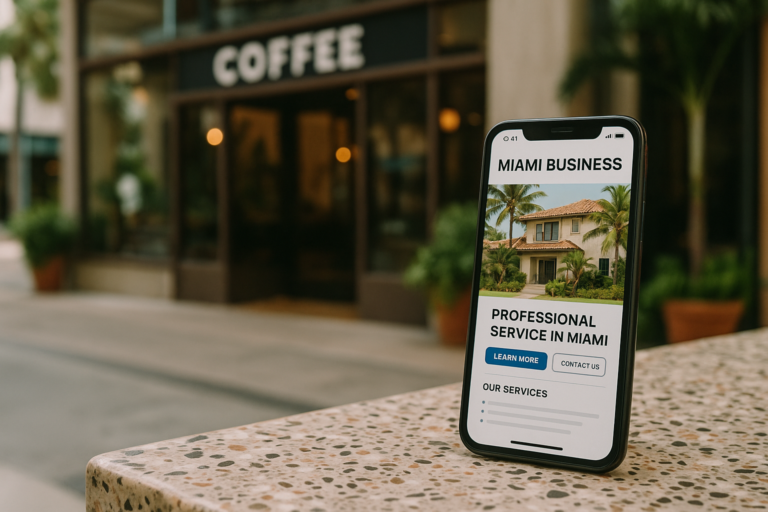
For Miami service companies, it also helps to signal local relevance early. Phrases such as service areas, neighborhood references, or local-specific messaging can reassure visitors that they are in the right place. Someone searching for a nearby provider wants confidence that your company serves their area and understands local needs.
Use Local Messaging That Connects With Miami Customers
Generic website copy often fails because it could apply to any company in any city. Local service businesses benefit when website content reflects the market they serve. Miami is a diverse, fast-moving environment where customers may be comparing providers based on speed, reliability, professionalism, and convenience.
Strong local messaging can include:
- Service area pages for specific Miami neighborhoods or surrounding communities
- References to local property types, weather conditions, or business environments where relevant
- Language that reflects the needs of residential or commercial customers in the area
- Location-specific title tags, headings, and body content written naturally
This approach supports both user trust and search visibility. It is a practical part of website conversion optimization for local businesses because relevance improves both traffic quality and conversion likelihood.
Build Service Pages Around Search Intent
Many small business websites make the mistake of listing all services on one page with only a few sentences for each. That structure may be simple, but it often limits organic visibility and conversion potential. Dedicated service pages give you room to address what customers are actually looking for.
Each core service should have its own page with:
- A clear description of the service
- The types of customers or situations it is for
- Common problems the service solves
- What the process looks like
- Trust-building details such as experience, service approach, or responsiveness
- A strong call to action
For example, a plumber should not rely only on a broad plumbing page if drain cleaning, water heater service, leak repair, and emergency service are all key revenue sources. Separate pages help attract more targeted traffic and improve the chance that a visitor feels they found exactly what they need.
This structure is one of the most effective Miami service business website tips because users convert more often when they land on a page closely matched to their search.
Make Contact Options Obvious and Easy to Use
If contacting your business feels difficult, visitors will leave. One of the biggest barriers to lead generation is friction. Your site should make reaching out feel simple on every device.
Best practices include:
- Displaying the phone number prominently in the header
- Using click-to-call functionality on mobile devices
- Adding clear call-to-action buttons throughout important pages
- Keeping forms short and easy to complete
- Including contact links in the navigation and footer
- Offering the most relevant contact option for your business model
A long form with too many required fields can lower conversions. In many cases, asking only for name, contact information, and a short message is enough for an initial inquiry. If more detail is needed, your team can gather it during follow-up.
This is a core principle in how to get more leads from a small business website: reduce effort for the visitor and increase clarity around the next step.
Strengthen Trust Signals Across the Site
People rarely contact a service company based on design alone. They want signs that your business is legitimate, professional, and capable. Trust-building elements can improve conversion rates significantly because they reduce uncertainty.
Useful trust signals include:
- Real photos of your team, work, office, or service vehicles
- Customer testimonials presented clearly and honestly
- Before-and-after project examples where appropriate
- Service area information
- Business hours
- Clear company background information on the about page
- Licensing or insurance information when relevant and accurate to share
Trust is especially important for service businesses because the customer is often inviting your company into a home, office, or important project. A polished website that answers practical concerns can make that decision easier.
Improve Mobile Experience for On-the-Go Searches
Local service searches often happen on phones. Someone may be looking for immediate help, comparing options during a work break, or reaching out while managing a property issue. If your mobile experience is weak, your lead flow will suffer.
A mobile-friendly lead generation site should offer:
- Fast loading pages
- Large, readable text
- Buttons that are easy to tap
- Simple navigation
- Short forms
- Sticky call buttons or quick contact access where appropriate
Mobile usability is not just a design preference. It directly affects local conversions. In practical terms, small business website lead generation in Miami often depends on whether a customer can quickly find information and contact your team from a phone.
Use Calls to Action With Purpose
Many websites use vague calls to action such as Learn More or Submit. Those phrases are not always persuasive because they do not tell the visitor what benefit comes next. Strong calls to action are specific, visible, and aligned with user intent.
Examples include:
- Request an Estimate
- Schedule a Consultation
- Call for Service
- Get Started Today
- Book an Appointment
The best call to action depends on the service and sales process. A home service company may prioritize calls. A B2B service firm may prefer consultation requests. The important point is consistency. Use the same main call to action throughout the site so users do not have to guess what to do.
This is a major part of website conversion optimization for local businesses because clearer calls to action create stronger conversion paths.
Support SEO With Location and Service Structure
Lead generation depends on both traffic and conversion. Even the best-designed site will struggle if the right people never find it. Search engine optimization helps local businesses attract visitors who are already looking for services.
Important foundational steps include:
- Optimizing page titles and meta descriptions
- Using headings that clearly describe the page topic
- Writing unique content for each service and location page
- Including internal links between related pages
- Adding accurate business information consistently
- Using image alt text where relevant
For a Miami company, local SEO should focus on matching the way nearby customers search. A person may search by service plus city, service plus neighborhood, or service plus emergency need. Your site structure should reflect those patterns naturally without stuffing keywords into every paragraph.
The goal is not just more traffic. It is better traffic from visitors who are more likely to become leads.
Create Dedicated Location Pages Carefully
If your business serves multiple areas around Miami, location pages can be useful, but only when they are written with purpose. Thin pages with nearly identical text often create a poor user experience. Instead, each page should provide meaningful local context.
A strong location page may include:
- The services offered in that area
- Common customer needs in that location
- Local landmarks or area references where appropriate
- Relevant project examples or service situations
- A clear call to action for residents or businesses in that area
Done well, location pages help both search visibility and conversion relevance. This is one of the more practical ways to improve small business website lead generation in Miami when your company serves several neighborhoods or nearby cities.
Use Content to Answer Pre-Sales Questions
Good content does more than attract search traffic. It also helps hesitant visitors feel ready to contact you. Many leads are lost because users still have unanswered concerns about timing, process, preparation, or service fit.
Useful educational content may cover topics such as:
- How a service process works
- Signs that a customer should call a professional
- What to expect during an estimate or consultation
- How to prepare for a service visit
- Differences between service options
This type of content can be published as blog posts, service page sections, or resource pages. It supports SEO while also moving visitors closer to action. For businesses wondering how to get more leads from a small business website, education is often an underused conversion tool.
Track What Visitors Actually Do
Website improvements should be guided by evidence, not guesswork. Analytics and conversion tracking can show which pages attract traffic, which pages generate leads, and where users drop off.
Key behaviors to monitor include:
- Contact form submissions
- Phone number clicks
- Landing pages with high exit rates
- Traffic sources
- Top-performing service pages
- Mobile versus desktop behavior
With that data, you can identify what needs attention. Maybe one service page gets traffic but few inquiries. Maybe mobile users are visiting but not converting. Maybe a high-traffic blog post needs a stronger internal link to a service page. Tracking turns a static website into an ongoing lead generation asset.
Keep the Site Fast, Updated, and Reliable
Performance issues can quietly hurt lead generation. Slow pages, broken forms, outdated plugins, or old contact information all create friction. Visitors may never tell you there is a problem; they simply leave and choose another provider.
Ongoing website maintenance should include:
- Checking form functionality regularly
- Updating business hours and service information
- Fixing broken links
- Maintaining plugin and theme updates
- Testing mobile usability
- Improving page speed where possible
For local service companies, reliability matters both online and offline. A site that feels current and functional reinforces the impression that the business itself is organized and responsive.
Align the Website With the Sales Process
A high-performing website should reflect how your business actually wins customers. If most leads need an estimate, your site should emphasize estimate requests. If trust and education are crucial before someone books, your content should support that. If fast response is your main advantage, your contact options and messaging should make speed obvious.
In other words, website strategy should not be separate from business strategy. The more closely your pages align with your real customer journey, the more effective they become. This is where website conversion optimization for local businesses becomes practical rather than theoretical.
Think through the customer path:
- They search for a service in Miami.
- They land on a relevant page.
- They quickly understand what you offer.
- They see reasons to trust your business.
- They find an easy way to contact you.
- They take action without confusion.
If any part of that path is weak, conversions can drop.
Common Mistakes That Limit Lead Generation
Even good-looking websites can underperform when common issues go unresolved. Watch for these frequent problems:
- Unclear headlines that do not explain the service
- No strong call to action on key pages
- Too little content on important service pages
- Outdated design that weakens credibility
- Poor mobile usability
- Slow loading times
- No location relevance for Miami-area customers
- Forms that ask for too much information
- No measurement of conversions
Fixing these issues can make a noticeable difference over time. Often, better results come not from one dramatic redesign, but from consistent improvements in clarity, usability, and local relevance.
Conclusion
Turning a basic website into a lead generation system is not about adding more pages for the sake of it or using aggressive sales language. It is about building a website that helps real people make decisions with confidence. For Miami service companies, that means combining local SEO, persuasive structure, mobile usability, trust-building content, and clear conversion paths.
A well-planned site should attract relevant visitors, answer their questions, demonstrate professionalism, and make contacting your business feel easy. When those pieces work together, your website becomes more than a digital placeholder. It becomes an active part of how your company grows.
If you want better results from your online presence, focus on the essentials: clear messaging, strong service pages, visible calls to action, local relevance, and ongoing optimization. Those fundamentals are what make small business website lead generation in Miami sustainable, practical, and valuable for long-term business development.