Not every page on a business website should do the same job. One of the most common problems on service business websites is using a single page type to try to accomplish everything at once. A page may try to rank in search results, explain multiple services, target several markets, and convert paid traffic all on the same URL. In most cases, that creates weak SEO, confusing messaging, and lower conversion rates.
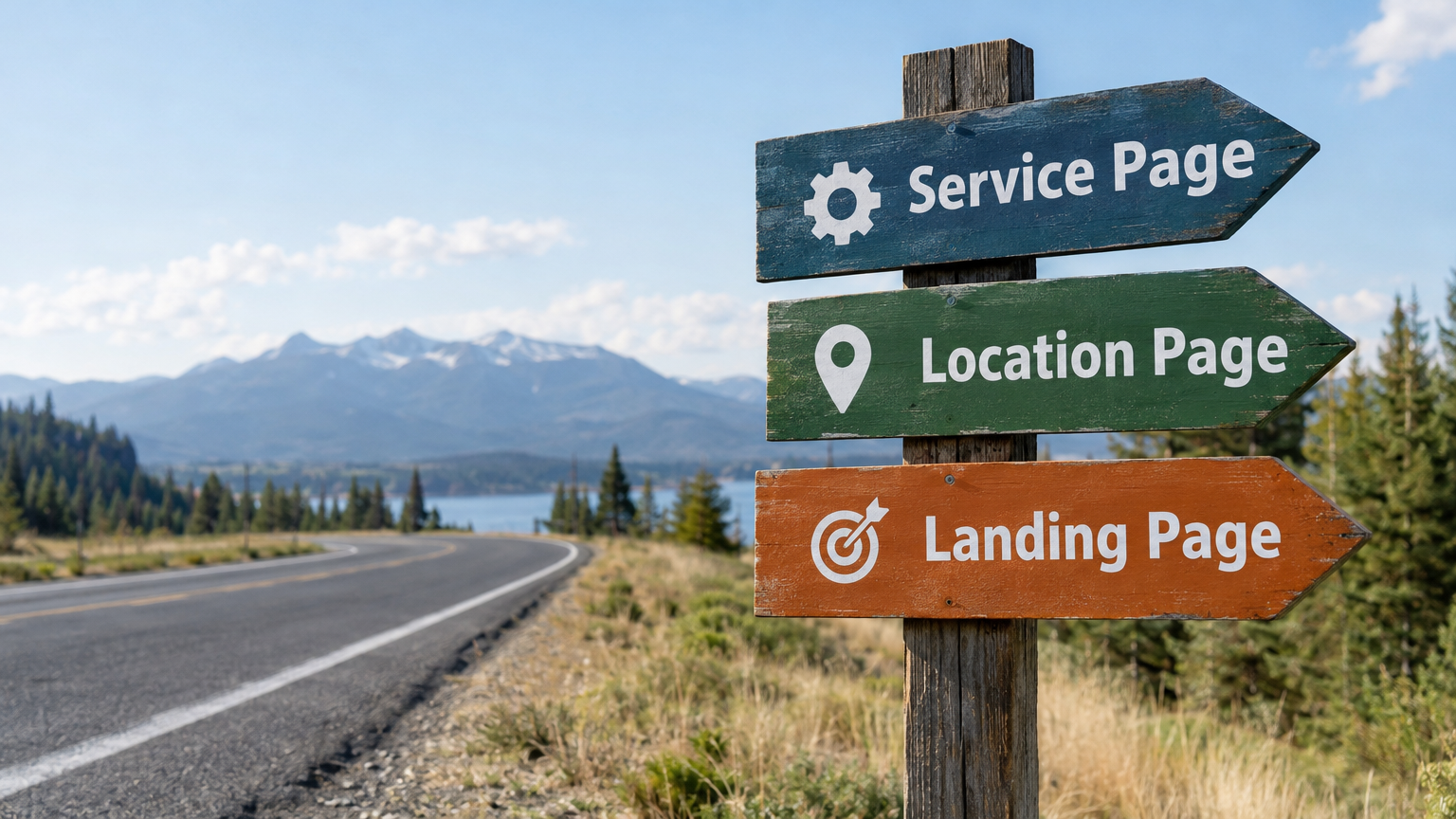
Understanding the difference between a service page, a location page, and a landing page helps you structure your website more strategically. Each page type has a distinct purpose. When used correctly, they work together to improve visibility, make your site easier to navigate, and help more visitors become leads.
For businesses investing in SEO, Google Ads, and long-term website growth, this is one of the most important structural decisions to get right. Below is a clear breakdown of what each page does, how they differ, and when to use them.
Why page types matter for SEO and conversions
Search engines and users both benefit when pages have a clear purpose. From an SEO perspective, focused pages make it easier to target specific keywords and match search intent. From a user experience perspective, they help visitors quickly find the information most relevant to their needs.
This is especially important for service businesses with multiple offerings or broad service areas. A law firm, contractor, clinic, consultant, or home service company may need to explain what it does, where it works, and why a visitor should take action now. That does not mean all of that content belongs on one page.
Using the right website page types for SEO creates several advantages:
- Clearer keyword targeting
- Stronger internal linking structure
- Better alignment with user intent
- Improved local relevance where applicable
- Higher conversion potential from ads and campaigns
- Less duplicate or overlapping content
If you have ever wondered about service page vs landing page strategy or the difference in location page vs service page use, the core answer is simple: each page should be built around one primary job.
What is a service page?
A service page is a core website page that explains a specific service your business offers. Its main purpose is to help users and search engines understand what you do, who it is for, how it works, and why someone should choose your business.
Examples include:
- Website Design
- WordPress Development
- Google Ads Management
- Local SEO
- Website Maintenance
- WooCommerce Development
A strong service page is usually part of your main site navigation and supports long-term organic visibility. It should be detailed enough to answer real questions, show expertise, and support conversions without becoming bloated or overly broad.
What a service page should include
- A clear headline focused on the service
- A useful explanation of what the service includes
- Who the service is for
- Common problems the service solves
- Benefits and outcomes
- Process or deliverables
- Trust-building elements such as experience, approach, or relevant capabilities
- Calls to action that fit the page naturally
Service pages are among the most important assets on a service business website because they often serve as the foundation of both SEO and sales messaging. If someone searches for a specific offering, your service page is often the best page to rank.
When to use a service page

Use a service page when you want to:
- Rank for a service-related keyword
- Explain a core offering in detail
- Build topical relevance around your expertise
- Create a permanent page in your site structure
- Support internal links from blog posts, ads, and other pages
For many businesses, service pages are the backbone of the site. They help define what the business actually offers and give search engines a clear map of its commercial topics.
What is a location page?
A location page is a page built to show that your business provides a service in a specific geographic area. Its main purpose is geographic relevance. It connects your services to a city, region, or service area so people searching by location can find the most relevant page.
Examples include:
- Website Maintenance for Businesses in Chicago
- Google Ads Management in Dallas
- WordPress Developer Serving Los Angeles Businesses
- Construction Marketing Services in Phoenix
A location page is not just a copy of a service page with a city name swapped in. Good location pages include meaningful local relevance, tailored content, and a clear explanation of how the service applies to customers in that market.
What a location page should include
- A clear description of the service offered in that location
- Area-specific language that is natural and useful
- Content tailored to the needs of customers in that market
- Supporting details about service availability, process, or customer needs in the area
- Relevant internal links to core service pages
- Clear contact or lead-generation elements
Location pages are especially useful for businesses serving multiple cities or regions. They allow you to create targeted entry points for geographic searches without forcing one general service page to rank everywhere.
When to use a location page
Use a location page when you want to:
- Target searches that combine a service with a location
- Expand visibility across multiple service areas
- Support local SEO strategy
- Give users a geographically relevant experience
However, location pages should only be created when they can offer real value. Thin, duplicated pages made only to capture city keywords often perform poorly and may weaken the overall quality of the site.
What is a landing page?
A landing page is a focused marketing page designed to drive a specific action. Unlike a standard service page, a landing page is usually built around conversion first. It may support SEO, paid ads, email campaigns, or seasonal promotions, but its structure is typically more controlled and action-oriented.
Examples include:
- A Google Ads page for emergency website support
- A lead generation page for free consultation requests
- A campaign page for website redesign services
- A specialized page for a limited-time offer or niche audience
The best landing pages for service businesses are tightly aligned with a traffic source and a single objective. They often reduce distractions, simplify navigation, and move the visitor toward a clear next step.
What a landing page should include
- A strong value-focused headline
- A specific offer or action
- Concise, persuasive copy
- Clear benefits
- Objection handling
- Trust signals such as experience or proof elements
- A prominent form, button, or call to action
Landing pages often differ from service pages in structure. They may use shorter copy blocks, stronger conversion framing, fewer navigation options, and more campaign-specific messaging.
When to use a landing page
Use a landing page when you want to:
- Support a Google Ads or paid social campaign
- Promote a specific offer
- Target a narrow audience segment
- Test messaging or conversion strategies
- Generate leads from a defined traffic source
In a service page vs landing page comparison, the biggest difference is intent. A service page explains and builds organic relevance over time. A landing page is often designed to persuade and convert a visitor now.
Service page vs location page vs landing page: quick comparison
| Page Type | Primary Purpose | Best For | SEO Role | Conversion Role |
|---|---|---|---|---|
| Service Page | Explain a specific service | Core offerings on your website | Targets service-related keywords | Supports trust and lead generation |
| Location Page | Connect a service to a geographic area | Multi-city or regional targeting | Targets local service searches | Helps local users find relevant information |
| Landing Page | Drive one specific action | Ads, campaigns, special offers | May support SEO, but usually campaign-focused | Built for direct conversions |
How to decide which page type you need
If you are unsure which page to create, start with the search intent and business goal behind it.
Create a service page if the main question is “What do you offer?”
When people need to understand a service, compare providers, or learn how your offering works, a service page is usually the right choice. These pages should be permanent parts of your site architecture and should provide depth, clarity, and relevance.
Create a location page if the main question is “Do you offer this service here?”
When geographic intent matters, a location page helps bridge the gap between the service and the market being searched. This is common for businesses serving clients across multiple metropolitan areas, regions, or national markets with localized search demand.
Create a landing page if the main question is “How do I get this visitor to take action?”
When you are sending traffic from ads, email campaigns, or promotions, a landing page is often the best tool. It lets you control the message, remove distractions, and guide visitors toward a single conversion goal.
Common mistakes businesses make
1. Treating every page like a landing page
Some websites make every page overly sales-heavy and thin on useful content. That can hurt SEO and reduce trust, especially when visitors want substantive information before contacting a business.
2. Using one general service page for every market
If your business serves many areas, one broad page may not be enough to rank well for geographic searches. A thoughtful location strategy can create stronger relevance where it makes sense.

3. Creating low-value location pages at scale
One of the most common local SEO mistakes is publishing dozens of nearly identical pages with only the city name changed. These pages often feel spammy, provide little value, and may struggle to perform.
4. Sending paid traffic to a standard service page
A detailed service page may be excellent for SEO, but that does not always make it the best destination for paid ads. Campaign traffic often performs better on focused pages built specifically for conversion.
5. Competing with yourself
If multiple pages target the same keyword or intent without a clear distinction, they can overlap and weaken performance. Each page should have a unique role, keyword theme, and audience purpose.
How these pages work together on a strong website
The best websites do not choose just one page type. They use all three strategically.
A healthy site structure might look like this:
- Core service pages explain major offerings
- Location pages support relevant geographic SEO targets
- Landing pages support advertising, lead generation, and campaign-specific messaging
- Blog posts educate visitors and internally link to service and campaign pages
For example, a digital marketing company might have a permanent service page for Google Ads Management, location pages for major service areas it actively targets, and separate landing pages for ad campaigns aimed at industries such as legal, healthcare, or home services.
This structure allows each page to do one job well while contributing to a larger SEO and conversion strategy.
SEO considerations for each page type
Service pages
Focus on search intent, content depth, and internal linking. These pages should clearly define the service, naturally include relevant keywords, and support the authority of the broader site.
Location pages
Focus on unique value, geographic specificity, and relevance. Avoid duplication. Write pages that genuinely help users in that area understand the service and why your business is a fit.
Landing pages
Focus on conversion alignment. Some landing pages may be indexed for organic search, while others may be used only for campaigns. The right choice depends on the purpose of the page and the traffic strategy behind it.
In all cases, quality matters more than volume. Search engines reward pages that are useful, clear, well-structured, and aligned with what users are actually looking for.
What this means for service businesses
Service businesses often need a website that does more than look professional. It has to explain services, build trust, support SEO, and turn traffic into inquiries. That is why page strategy matters so much.
If your website currently has only a homepage and a few generic pages, you may be missing important opportunities. Well-built service pages can improve organic visibility. Smart location pages can help capture geographic demand. Strong landing pages can improve advertising results and lead quality.
The best landing pages for service businesses are not generic templates. They are built around a specific audience, a clear offer, and a conversion goal. Likewise, the best service pages are not just placeholders in a menu. They are useful resources that clearly communicate expertise and value.
Conclusion
Understanding the difference between a service page, a location page, and a landing page is essential if you want a website that performs well in both search and lead generation.
A service page explains what you do. A location page shows where you do it. A landing page drives a focused action.
When businesses confuse these roles, websites become less effective. When they separate them strategically, pages become stronger, clearer, and more useful for both users and search engines.
If you are planning a new website, redesigning an existing one, or improving your SEO structure, start by asking what each page is supposed to accomplish. That one decision can shape better rankings, better user experience, and better conversions across your entire site.