For many owners, deciding between Google Ads and SEO is not really a marketing question first. It is a business timing question. Do you need leads quickly, or are you building a steady pipeline that can grow over time? For small businesses in Miami, that decision matters even more because local competition is high, customer expectations are fast-moving, and many service categories are crowded with both national brands and neighborhood competitors.
If you run a local service business, you have probably heard both sides. One side says Google Ads can put you at the top of search results right away. The other says SEO creates long-term visibility and better returns over time. Both claims are true in the right context. The challenge is knowing which should come first for your specific situation.
This guide breaks down the difference between Google Ads and SEO for small businesses in Miami, including how each channel works, what each one is best for, common mistakes to avoid, and how to decide what to prioritize first. If you are focused on local marketing for service businesses, the right answer usually depends on your timeline, budget, competition, and how ready your website is to convert traffic into actual leads.
Why This Decision Matters for Miami Small Businesses
Miami is a unique market. It is large, diverse, competitive, and highly local at the same time. People often search with strong intent, using location-based terms like nearby neighborhoods, service categories, and urgent needs. Someone may search for a provider in Brickell, Coral Gables, Kendall, Doral, or Miami Beach rather than just using a broad city term. That means your marketing has to match both local relevance and buyer intent.
For a small business, resources are limited. You may not have the budget to dominate every channel at once. Choosing the wrong first move can delay results, waste ad spend, or leave you waiting too long for traffic that has not been built yet. Prioritizing correctly helps you:
- Generate leads based on your current business goals
- Avoid overspending on tactics that are not yet a good fit
- Build momentum in the channel most likely to help first
- Create a more balanced marketing strategy over time
That is why the debate around Google Ads vs SEO for small business Miami should not be reduced to which channel is better in general. The better question is which one makes more sense first.
What Google Ads Does Best
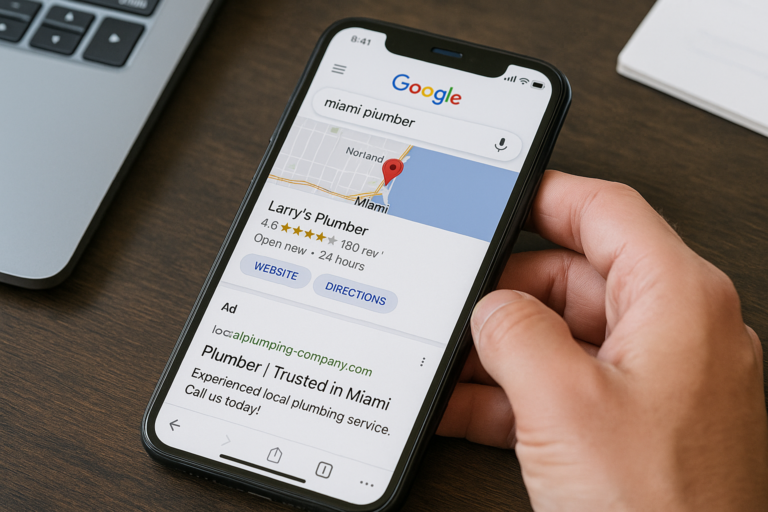
Google Ads is a paid search platform that lets your business appear in sponsored results when people search for specific keywords. You choose the services, locations, and terms you want to target, set a budget, and pay when someone clicks.
For many small businesses, the biggest advantage is speed. If your campaign is structured correctly, you can start showing up in search results almost immediately. That makes Google Ads especially useful when your business needs demand now rather than months from now.
Benefits of Google Ads for Local Leads
One reason Google Ads for local leads is so attractive is that it gives you control. You can decide:
- Which services to promote
- Which neighborhoods or service areas to target
- What times of day your ads appear
- Which landing pages users visit
- How much you are willing to spend
That level of control helps local businesses focus on the highest-value parts of their offering. Instead of trying to rank organically for everything all at once, you can put budget behind your most profitable or urgent service lines.
Google Ads also works well when search intent is strong. If someone searches for a service provider and needs help soon, a well-written ad with a relevant landing page can capture that demand fast. This is especially helpful for businesses that handle urgent, transactional, or appointment-based requests.
When Google Ads Often Makes Sense First
Google Ads may be the smarter first priority if:
- Your business is new and has little or no organic visibility
- You need leads quickly
- You are entering a competitive market
- You are launching a new service
- You want to test which services and messages convert best
- Your website already has strong landing pages and lead capture elements
For example, imagine a new service business in Miami with a clean website but no established search presence. SEO will take time to build. Google Ads can help that business get in front of people searching right now while the longer-term visibility work develops in the background.
Important Limitations of Google Ads
Google Ads is powerful, but it has tradeoffs. The most obvious is cost. In competitive local industries, clicks can become expensive. If your targeting is too broad, your landing page is weak, or your follow-up process is inconsistent, you can spend money without seeing enough return.
Paid traffic also tends to stop when the budget stops. Unlike SEO, it does not keep compounding once the campaign is paused. That does not make it a bad investment, but it does mean your pipeline can become dependent on ongoing ad spend.
Another issue is campaign quality. Google Ads is not just about turning on a campaign. Success depends on keyword selection, match types, ad copy, location targeting, conversion tracking, landing page relevance, and ongoing optimization. Without those pieces, the platform can become inefficient quickly.
What SEO Does Best
SEO, or search engine optimization, helps your website and business profiles appear in unpaid search results. For local businesses, this includes both your website pages and your local presence in map-related search experiences.
The main strength of SEO is durability. It takes longer to build than paid traffic, but once it starts working, it can deliver leads without requiring payment for every click. For many businesses, that makes SEO one of the most valuable long-term growth channels available.
Benefits of Miami Small Business SEO
Miami small business SEO is not only about ranking for broad city terms. Good local SEO helps your business appear for relevant services in the specific areas you serve. It can improve visibility when people search for businesses nearby, compare providers, or look for detailed service information before contacting someone.
SEO can also support trust. Many users skip ads and prefer to explore organic results because they want to compare options, read service pages, and understand a company’s experience before reaching out. If your business appears naturally in local results with a helpful website, that visibility can reinforce credibility.
Strong local SEO usually includes:
- Service pages that clearly describe what you offer
- Location relevance throughout the site
- Fast, mobile-friendly website performance
- Clear page titles and metadata
- Helpful content that answers real customer questions
- Consistent business information across the web
- An optimized Google Business Profile
When these elements are handled well, SEO can become a dependable source of traffic and leads.
When SEO Often Makes Sense First
SEO may be the better first priority if:
- You want to build long-term lead generation
- You already get some word-of-mouth traffic but need stronger online visibility
- Your budget is limited and you want to invest in lasting assets
- Your services are researched carefully before purchase
- You are willing to wait longer for momentum
- Your website needs stronger structure and content anyway
For example, an established Miami service business with a decent reputation but weak search visibility may benefit more from fixing its local SEO foundation first. If people are already searching for that business category regularly, improving organic presence can create a stronger long-term return than relying only on paid clicks.
Important Limitations of SEO
The biggest limitation is time. SEO is not instant, especially in competitive local markets. It may take months to improve rankings, publish stronger content, earn visibility, and see lead volume increase. That can be frustrating for businesses that need immediate pipeline support.
SEO also requires consistency. It is not a one-time task. Search trends change, competitors improve, and websites need ongoing updates. Technical issues, outdated pages, and weak local signals can all limit performance.
Another challenge is uncertainty. No one can guarantee rankings. Even with best practices, search performance depends on competition, site quality, local relevance, and how well your content matches search intent.
Google Ads vs SEO: The Core Tradeoffs
If you are choosing between the two, it helps to compare them side by side based on what matters most to a small business owner.
Speed
Google Ads wins on speed. It can produce visibility and clicks quickly, often much faster than SEO.
SEO takes longer because it relies on building authority, relevance, and site quality over time.
Cost Structure
Google Ads requires ongoing ad spend. You pay for traffic as it comes in.
SEO usually involves upfront and ongoing investment in strategy, content, technical improvements, and local optimization, but not a direct cost per click from search engines.
Long-Term Value
SEO often wins in long-term value because strong rankings can continue generating traffic after the work is published and optimized.
Google Ads can remain profitable, but once the budget pauses, traffic from that channel usually drops quickly.
Predictability
Google Ads can be more predictable in the short term if tracking is set up correctly and campaign variables are controlled.
SEO is less predictable in exact timing, but it can build a more resilient presence over time.
Testing and Insights
Google Ads is excellent for testing offers, keyword intent, and landing page messaging. You can learn quickly which services attract clicks and which ones convert.
SEO also provides insights, but the testing cycle is slower.
Trust and Click Behavior
Some users click ads readily, especially when they have urgent needs. Others prefer organic listings because they trust them more or want to compare providers in more depth.
That means both channels can reach valuable audiences, but often at different moments in the buying process.
How Miami Search Behavior Affects the Choice
Local search behavior can change the right strategy. In Miami, many consumers search on mobile devices, need immediate answers, and expect clear local relevance. They may compare businesses quickly based on map visibility, reviews, website quality, response speed, and whether a page clearly serves their part of the city.
This creates several important considerations:
- Urgent, high-intent searches may respond well to Google Ads
- Neighborhood-level searches often benefit from strong local SEO signals
- Mobile experience matters for both channels
- Spanish and English audience considerations may influence content and ad strategy
- Trust signals on your website can strongly affect conversion rates
In other words, your marketing strategy has to work not just at the city level but at the local service-area level. That is one reason generic approaches often underperform in Miami.
When a Small Business Should Prioritize Google Ads First
There are several situations where starting with Google Ads is the practical move.
You Need Leads Immediately
If revenue depends on getting inquiries soon, waiting for SEO to build may not be realistic. Google Ads can start generating traffic while you strengthen your long-term foundation.
You Are Launching or Repositioning
A new business, a new website, or a new service line may not have enough organic visibility yet. Paid campaigns can create immediate exposure and also reveal which search terms and landing pages deserve more long-term SEO investment.
Your Organic Presence Is Near Zero
If your site has little authority, weak content, or no local optimization, SEO will take time. Ads can help close the gap while you fix those issues.
Your Best Services Have Clear Buyer Intent
Some services convert well from paid search because the customer knows what they need and is ready to contact someone. In these cases, targeted ads can produce quicker results than broad content efforts.
You Have Strong Conversion Infrastructure
Ads work best when your website is ready. That means clear service pages, compelling calls to action, mobile usability, fast loading, and a simple path to contact. If those pieces are already in place, Google Ads can accelerate demand capture effectively.
When a Small Business Should Prioritize SEO First
There are also situations where SEO should come first.
You Want Sustainable Growth
If your goal is to reduce dependence on paid traffic over time, SEO is often the stronger first investment. It builds an asset rather than renting visibility.
Your Website Needs Foundational Work Anyway
Many small business websites need better content, page structure, internal linking, local targeting, and technical cleanup. Investing in SEO first can improve overall marketing performance, including future paid campaigns.
Your Budget Is Tight
If you do not have enough monthly budget to run ads, test campaigns, optimize pages, and absorb some learning costs, starting with SEO may be more practical. It can be a slower path, but often a more sustainable one for limited budgets.
Your Customers Research Before They Contact
Some buyers do not convert on first click. They compare businesses, read service details, and evaluate trust signals. In that kind of decision process, a strong organic presence can influence more of the buyer journey.
You Already Have Some Local Recognition
If your business is known in the area but your website does not reflect that visibility, SEO can help you capture demand that already exists.
Why the Best Answer Is Often Not Either-Or
Although business owners often frame this as a choice between two competing channels, the strongest strategy is often phased rather than exclusive. You may prioritize one first while laying groundwork for the other.
For example:
- Use Google Ads to generate short-term leads while building local SEO pages
- Use SEO to improve service pages before sending paid traffic to them
- Use paid search data to discover high-converting keywords for organic content
- Use organic visibility to reduce ad dependence over time
This approach is especially useful in local marketing for service businesses, where lead flow and trust both matter. Ads can create immediate visibility. SEO can build a stronger long-term brand presence and improve lead quality over time.
A Practical Decision Framework
If you are still unsure which to prioritize first, walk through these four questions.
1. How Quickly Do You Need Results?
If the answer is within weeks, Google Ads usually deserves early attention. If your timeline is measured in months and you are building strategically, SEO may be the better first move.
2. How Strong Is Your Website Right Now?
If your website is weak, both channels can suffer. Poor pages make ads expensive and make SEO slow. In that case, improving the site itself may be the real first priority before leaning heavily into either channel.
3. What Is Your Budget Tolerance?
If you can support ongoing ad spend and optimization, paid search may help faster. If you need to build value more gradually, SEO may make more sense as the core investment.
4. What Kind of Search Intent Drives Your Business?
If customers need your service urgently and convert quickly, ads may perform well. If customers compare, research, and return later, SEO may have more influence across the buying process.
Common Mistakes Small Businesses Make
Whether you choose SEO or Google Ads first, certain mistakes can undermine results.
Sending Traffic to Weak Pages
Many businesses focus on getting clicks before making sure the website is ready. Traffic alone does not create leads. Pages need clear messaging, local relevance, trust elements, and strong calls to action.
Targeting Too Broadly
Local businesses often waste effort by targeting wide generic terms instead of service-specific and location-relevant searches. Miami is too competitive for vague positioning.
Ignoring Conversion Tracking
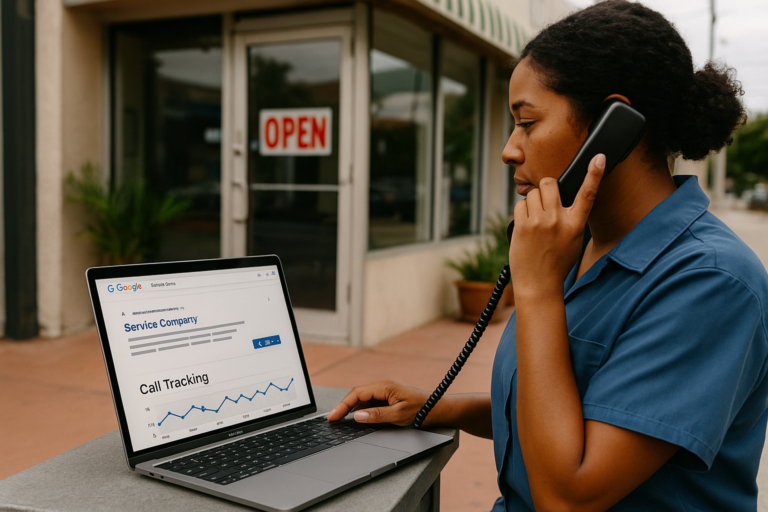
If you do not know which calls, form submissions, or landing pages are producing results, it is hard to improve either channel effectively.
Expecting Instant SEO Results
SEO can be highly valuable, but it is not a quick fix. Unrealistic expectations often lead businesses to abandon it before momentum builds.
Running Ads Without Ongoing Optimization
Paid campaigns need review and refinement. Search terms, bidding, ad relevance, and landing page performance all affect cost and results.
Treating SEO as Only Blog Writing
SEO is broader than publishing articles. For local service businesses, service pages, local optimization, technical performance, and business profile management are just as important.
What a Smart First Phase Often Looks Like
For many small businesses in Miami, a practical first phase looks something like this:
- Improve the website so it clearly explains services, locations, and next steps
- Set up accurate tracking for calls and form submissions
- Optimize core service pages for local relevance
- Strengthen Google Business Profile and local business consistency
- Launch a focused Google Ads campaign for highest-intent services if immediate leads are needed
- Build out longer-term SEO content and supporting pages over time
This kind of sequence helps reduce waste. It recognizes that both traffic generation and conversion readiness matter. It also creates a path where short-term lead generation does not come at the expense of long-term growth.
So, Which Should You Prioritize First?
If your small business in Miami needs leads now, has a workable budget, and already has a decent website, Google Ads is often the best first priority. It can help you reach high-intent searchers quickly and start generating data, inquiries, and market feedback.
If your business is focused on sustainable visibility, has limited budget flexibility, or needs stronger website foundations, SEO is often the better first investment. It takes longer, but it can build a more durable presence that keeps working over time.
In many cases, the smartest answer is not choosing one forever. It is choosing what comes first based on where your business is today, then adding the second channel at the right stage.
Conclusion
The debate around Google Ads vs SEO for small business Miami is best understood through timing, intent, and business readiness. Google Ads can create fast visibility and support immediate lead generation. SEO can strengthen your long-term presence, improve trust, and reduce dependence on paid traffic over time. Neither channel is automatically right for every business at every stage.
For Miami service businesses, the best decision usually comes down to practical priorities: how fast you need results, how competitive your market is, how strong your website currently is, and how much you can invest consistently. If you need short-term momentum, paid search may deserve first priority. If you are building for sustainable growth, local SEO may be the stronger foundation.
The most effective strategy is often phased, intentional, and grounded in how real customers search. When your website, local visibility, and lead-generation strategy work together, both Google Ads and SEO can become valuable parts of a stronger marketing system.