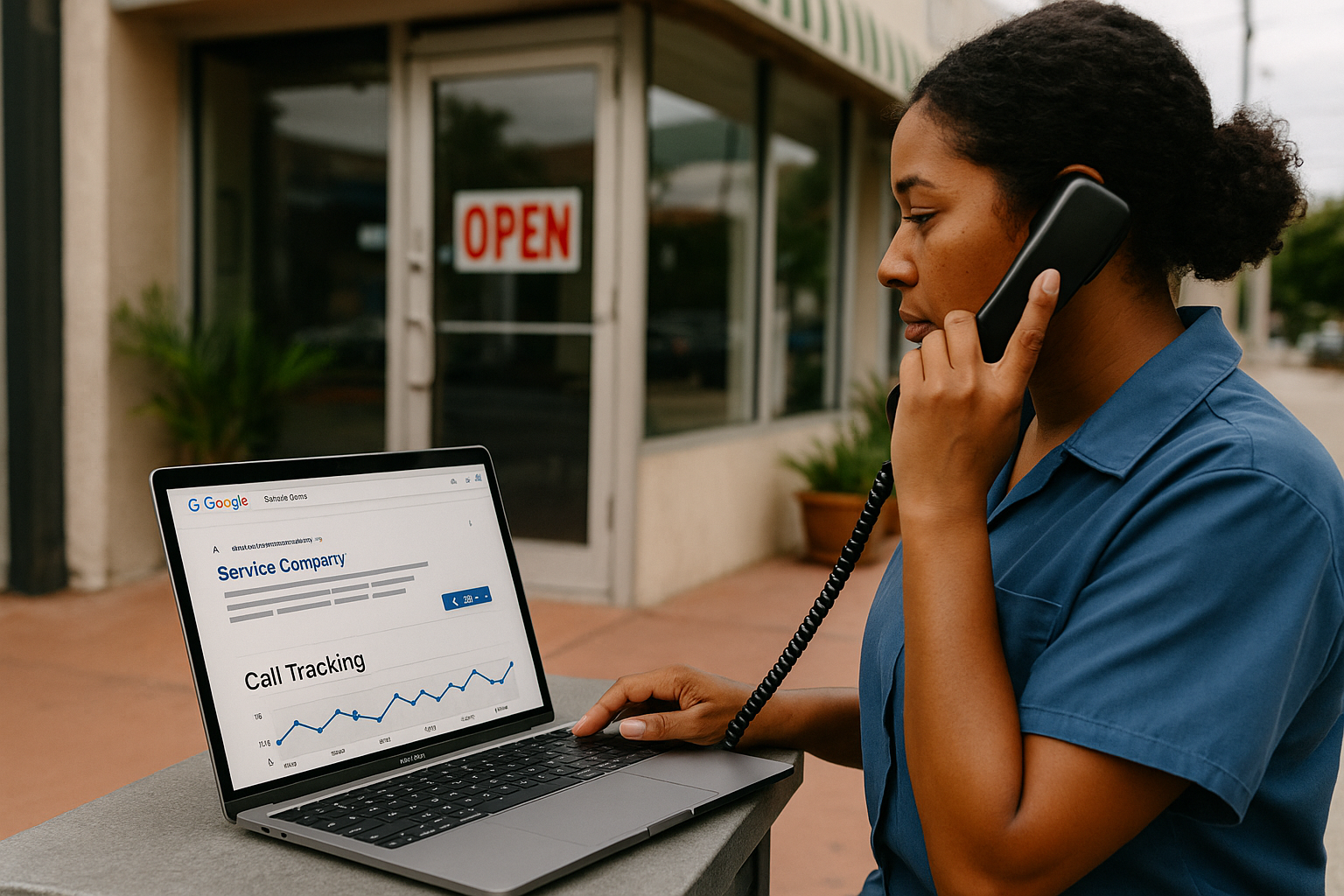
For many Miami small businesses, the phone is still one of the most important ways new customers make contact. A visitor may browse a service page, click an ad, read a few reviews, and then decide to call. When that happens, the call often becomes the most valuable conversion on the website. The challenge is knowing exactly what caused it.
Without a proper tracking setup, business owners are left guessing. They may know that calls are coming in, but not whether those calls started from Google Ads, organic search, a landing page, a mobile click-to-call button, or a specific marketing campaign. That makes it harder to improve ad spend, optimize the website, and understand which leads are actually turning into real opportunities.
This is where call tracking becomes useful. With the right setup, Miami businesses can connect website activity and ad clicks to incoming phone calls, giving them a clearer picture of what is working and what needs attention. For service-based companies especially, this kind of visibility can make a major difference in lead quality and marketing decisions.
In this guide, we will look at how call tracking for small business websites Miami can work, how Google Ads call tracking Miami setups help measure paid campaigns, and why website call tracking for service businesses is often one of the most practical forms of lead tracking for small business websites.
Why Phone Call Tracking Matters for Small Businesses
For many local companies, not every lead fills out a form. In fact, a large share of ready-to-buy customers prefer to call directly, especially when they need a fast answer, want to discuss pricing, or need help choosing the right service.
This is common in industries such as home services, professional services, repair, legal support, consulting, and other local service businesses. A phone call often signals stronger intent than a casual page view. Someone willing to pick up the phone is often further along in the decision process.
Tracking those calls helps answer important questions:
- Which traffic sources lead to actual phone calls?
- Which Google Ads campaigns generate qualified leads?
- Which website pages encourage visitors to call?
- Are mobile visitors calling more than desktop visitors?
- Are marketing dollars producing real conversations, not just clicks?
Without these insights, a business might keep investing in underperforming campaigns or overlook pages that are quietly generating strong results.
What Call Tracking Actually Means
Call tracking is the process of measuring phone calls that result from your digital marketing. Instead of simply having one static phone number appear everywhere without context, a call tracking system helps attribute incoming calls to a traffic source, campaign, ad, keyword grouping, landing page, or website visit.
There are two common ways this works:
1. Website call tracking
This setup uses dynamic number insertion or similar technology to display a tracked phone number on the website based on how a visitor arrived. For example, one visitor who found the site through Google Ads may see a different tracking number than someone who came through organic search. Calls still route to the same business line, but the tracking system records which channel drove the call.
2. Google Ads call tracking
This focuses specifically on calls connected to paid search campaigns. It can track calls from call extensions, call assets, call ads, and calls made after someone clicks an ad and then calls from the website. This gives advertisers better visibility into which campaigns produce actual phone conversations.
The goal is not to change how customers contact the business. The goal is to measure what led them to call.
How Website Call Tracking Helps Service Businesses
Website call tracking for service businesses is especially valuable because service-based decisions often involve urgency, trust, and personal discussion. A person needing help with a time-sensitive issue may not want to wait for an email reply. They want immediate contact.
For a Miami service business, call tracking can reveal patterns such as:
- Visitors from certain neighborhoods call more often than others
- One service page drives significantly more phone leads than another
- Mobile users are much more likely to call than complete forms
- Certain blog posts or local landing pages assist conversion paths
- Paid traffic generates more calls during business hours than after hours
This kind of information helps shape website updates, ad targeting, landing page design, and staffing decisions. If the business knows that call volume rises during certain times or from certain channels, it can respond more effectively.
How Call Tracking Fits Into Lead Tracking for Small Business Websites
Lead tracking for small business websites should not stop at form submissions. A complete picture of lead generation usually includes several conversion actions, including phone calls, contact forms, quote requests, appointment bookings, live chat starts, and sometimes text messages.
Phone call tracking fills a major gap in reporting. Many businesses review analytics and see traffic increasing, but they still cannot tell whether high-intent users are actually contacting them. If call conversions are missing, the reporting is incomplete.
When website call tracking is combined with analytics and conversion tracking platforms, businesses can start understanding:
- Which channels drive leads with the strongest intent
- Which pages influence phone-based conversions
- How users move from first visit to final contact
- Where marketing spend should be increased, reduced, or reworked
This makes call tracking not just a phone feature, but an important part of broader lead attribution.
How Google Ads Call Tracking Works
Google Ads call tracking Miami campaigns often involve more than one call path. A customer may call directly from the ad, or they may click the ad, land on the website, and call from there. Both actions can matter.
Google Ads can support call measurement in several ways:
Calls from ads
These occur when someone taps or clicks a call-focused asset or ad format and places a call directly from the search result. This is especially useful for mobile users who are ready to contact the business immediately.
Calls to a number on the website after an ad click
In this case, a user clicks a Google Ad, lands on the website, and then calls the displayed number. With the proper tracking configuration, that call can be attributed back to the ad interaction.
Imported call conversions
Some businesses use third-party call tracking systems and send qualified call data into Google Ads as conversions. This can help improve campaign optimization if the business defines what counts as a valuable call.
For example, a short accidental call may not be useful, while a longer conversation about a service request may be counted as a meaningful lead. Setting clear conversion rules helps produce better reporting.
Practical Example: A Miami Service Business Running Ads
Imagine a local Miami service business running Google Ads for several service categories. The company has separate landing pages, a phone number prominently displayed, and a goal of generating more local calls.
Without call tracking, the business might only know the following:
- Campaign A got 120 clicks
- Campaign B got 95 clicks
- The website received more traffic this month
- The phone rang often
That information is incomplete. It does not show whether those calls came from ads, organic visitors, repeat customers, or offline referrals.
With a proper setup, the business might learn:
- Campaign A generated many clicks but few calls
- Campaign B generated fewer clicks but more qualified phone leads
- Visitors landing on one specific service page called at a higher rate
- Mobile ad traffic produced the strongest call conversion rate
- Calls from a certain ad group tended to last longer and involve stronger intent
Those insights lead to smarter decisions. The business can shift budget toward the better-performing campaign, improve weaker landing pages, and adjust ad messaging to match high-intent search behavior.
Benefits of Call Tracking for Miami Small Businesses
Clearer marketing attribution
One of the biggest benefits of call tracking for small business websites Miami is understanding which marketing activities actually cause people to call. This helps reduce guesswork and gives business owners a more practical view of return on investment.
Better Google Ads optimization
Paid advertising becomes easier to improve when call data is included. Instead of optimizing only for clicks or form fills, businesses can evaluate which campaigns generate real conversations. That often leads to better budget allocation.
Stronger landing page decisions
Some pages look good on paper but do not persuade visitors to take action. Call tracking can reveal whether visitors are actually calling after viewing a page. That makes page testing more meaningful.
Improved understanding of customer behavior
Businesses can start seeing patterns in how users engage before they call. This may include device type, source channel, time of day, and page path. The result is a more complete understanding of lead behavior.
More useful lead quality signals
Not every conversion is equal. In some setups, businesses can use call duration, call outcome, or internal qualification standards to better understand lead quality. This adds depth beyond simple click counts.
Important Considerations Before Setting Up Call Tracking
Choose tracking numbers carefully
Businesses often worry that using tracked phone numbers will create confusion. In practice, call tracking numbers usually forward to the main business line, so customers still reach the same team. The important part is using the setup consistently and correctly.
Keep local SEO in mind
For local visibility, businesses should be thoughtful about how phone numbers appear across major listings and citations. Consistency in core business information still matters. A call tracking setup should be implemented in a way that supports measurement without creating unnecessary inconsistency in local business references.
Define what counts as a conversion
Not every phone call should be treated as a successful lead. Some businesses count calls over a minimum duration. Others review calls based on call intent or whether the caller was genuinely seeking the service. Clear definitions produce cleaner reports.
Make sure analytics systems work together
Call tracking is most useful when connected with website analytics, ad platforms, and conversion reporting. A disconnected setup can create blind spots or duplicate data. Integration planning matters.
Respect privacy and disclosure requirements
If call recording or advanced reporting is used, businesses should understand applicable privacy and disclosure responsibilities. Tracking should be implemented responsibly and transparently.
Best Practices for Website Call Tracking
Place the phone number where users can find it easily
A tracked phone number should still be easy to access. Important placements often include the header, contact page, service pages, and mobile click-to-call areas. Tracking does not replace usability.
Use strong call-focused page design
If phone calls are a major goal, the website should support that goal. Clear calls to action, trust-building content, concise service explanations, and visible contact options can all help improve results.
Segment traffic sources
The value of tracking increases when businesses can distinguish between paid search, organic search, direct traffic, referral traffic, and other channels. This makes reporting more actionable.
Review data regularly
Call tracking only becomes useful when the data is reviewed and used. Monthly or campaign-level analysis can reveal patterns that support website updates and ad improvements.
Compare calls with other lead types
It helps to compare phone calls with form submissions and other conversions. Some channels may produce more calls, while others generate more written inquiries. Looking at the full mix leads to better strategy decisions.
Best Practices for Google Ads Call Tracking
Track both direct ad calls and website calls
Some users call from the ad immediately. Others prefer to visit the site first. Measuring both behaviors gives a more accurate view of campaign performance.
Use campaign-specific landing pages when appropriate
Dedicated landing pages can make attribution clearer and often improve conversion rates by matching page content to ad intent.
Set meaningful conversion thresholds
If every short call is counted equally, reports can become misleading. Setting thresholds or qualification logic helps focus on calls that represent real business opportunities.
Align ad copy with call intent
If the objective is to generate phone leads, ad messaging should support immediate contact. Clear service language and action-oriented messaging can improve call-focused performance.
Monitor by device and time of day
Call behavior often varies by device and schedule. Mobile users may call more often, and certain hours may produce stronger results. Reviewing this data can improve bidding and scheduling decisions.
Common Mistakes to Avoid
Relying only on click data
Clicks do not always reflect business value. A campaign with many clicks may produce fewer quality calls than a campaign with lower traffic but stronger intent.
Using one phone number everywhere without attribution
A single static number may make tracking simpler on the surface, but it limits visibility into source performance.
Ignoring call quality
If reports count every call the same way, the business may optimize toward volume instead of qualified leads. Quality matters.
Forgetting mobile usability
Many local service calls happen on mobile devices. If the phone number is hard to tap, hard to find, or buried too low on the page, tracking alone will not solve the problem.
Failing to act on the data
The real value of call tracking comes from using the information. If no one reviews campaign performance, landing page behavior, or source-based conversion trends, the system becomes underused.
What Success Looks Like
A successful call tracking setup does more than count ringing phones. It helps a business answer practical questions with confidence. Which pages drive calls? Which ads create valuable leads? Which traffic sources deserve more attention? Which campaigns waste budget?
For Miami companies that depend on inbound calls, these answers can support smarter marketing decisions across both the website and paid advertising. Over time, better attribution leads to better optimization, and better optimization usually leads to more efficient lead generation.
This is especially important in competitive local markets where businesses need to understand not just how many people visit, but how many take meaningful action.
Conclusion
For local companies that rely on phone inquiries, call tracking is one of the most practical ways to understand digital marketing performance. It connects website visits and ad clicks to real conversations, helping businesses see which efforts generate actual opportunities instead of surface-level traffic.
Whether the focus is website call tracking for service businesses or a more advanced Google Ads call tracking Miami setup, the value comes from clearer attribution and better decisions. Businesses can identify which pages and campaigns lead to calls, refine budget allocation, improve user experience, and measure lead activity more accurately.
As part of broader lead tracking for small business websites, call tracking helps close an important reporting gap. For many Miami small businesses, it can turn phone calls from a vague marketing outcome into a measurable, actionable source of insight.