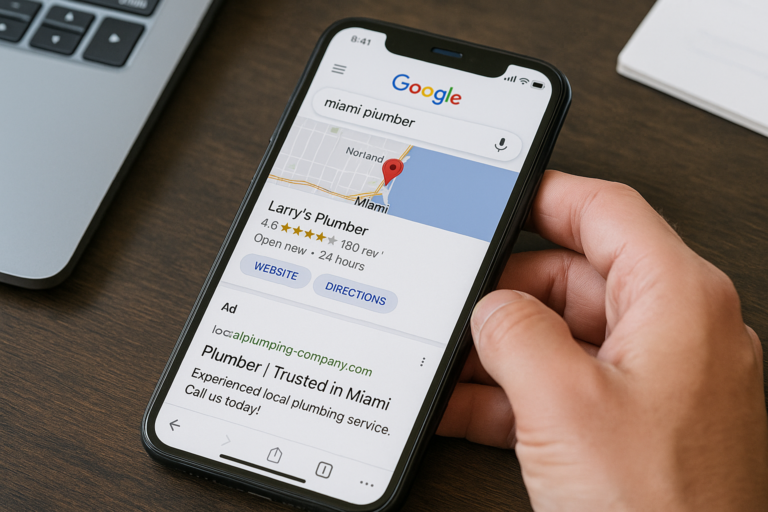

For many local companies, Google Ads can be one of the fastest ways to get in front of people who are actively searching for a service right now. That matters in a competitive market like Miami, where small businesses often need to stand out quickly in crowded search results, map listings, and local service categories.
But running ads is not the same as running profitable ads. A campaign that brings clicks without qualified leads can waste budget fast. That is why a strong small business Google Ads strategy should focus on search intent, local targeting, landing page relevance, and clear conversion tracking from the start.
This guide explains how to approach Google Ads for Miami small businesses in a way that supports local lead generation Google Ads efforts, improves campaign quality, and helps owners make better decisions about budget and performance. Whether you manage campaigns in-house or work with a provider for Miami PPC management, the principles are the same: target the right searches, send traffic to the right page, and measure what actually turns into leads.
Why Google Ads Works for Local Miami Businesses
Google Ads is effective because it reaches people who are already showing intent. Someone searching for a service in Miami is often much closer to contacting a business than someone scrolling social media casually. That intent can make paid search especially valuable for service-based companies, local retailers, professional offices, contractors, and other businesses that rely on timely inquiries.
Miami also presents unique advertising opportunities. Search behavior can vary by neighborhood, language preference, season, and device use. A person searching on a mobile phone in Brickell during lunch may behave differently from someone searching from Kendall in the evening. Google Ads allows businesses to respond to those differences through geographic targeting, scheduling, keyword strategy, and mobile-focused ad formats.
When done well, Google Ads can help a small business:
- Appear in front of local prospects at the moment they are searching
- Generate calls, form submissions, appointment requests, or store visits
- Prioritize high-intent traffic instead of broad visibility alone
- Control budget more precisely than many traditional advertising channels
- Test offers, locations, and messaging with measurable feedback
The key is that the campaign structure must be built around qualified lead generation, not just traffic volume.
Start With the Right Campaign Goal
Before choosing keywords or writing ads, define what a qualified lead means for the business. That answer shapes every part of the account.
For one business, a qualified lead may be a phone call from someone within a service radius who needs help this week. For another, it may be a form submission from a commercial client with a larger project budget. If those distinctions are not clear, campaigns often optimize for the wrong actions.
Good lead definitions usually include factors like:
- Service area
- Type of customer
- Urgency level
- Specific service requested
- Budget fit or project scope
- Preferred contact action such as call, form, or booking
Once that is defined, set up campaigns to support conversions rather than clicks alone. In many cases, a Search campaign is the best starting point for local lead generation Google Ads because it targets active searchers with high intent. Display and video campaigns can be useful later, but small businesses usually benefit most from beginning with focused search traffic.
Choose Keywords Based on Intent, Not Just Volume
Keyword strategy is the foundation of Google Ads for Miami small businesses. It is tempting to go after broad terms that appear popular, but those often attract less qualified clicks and create higher costs. A smaller set of focused, local, service-driven keywords usually performs better for lead generation.
Prioritize high-intent search phrases
High-intent keywords often include service terms, location modifiers, and action-oriented language. Searches such as “emergency plumber Miami,” “business lawyer near me,” or “roof repair Miami FL” typically show stronger commercial intent than broad informational searches.
Useful keyword types can include:
- Core service + city, such as service plus Miami
- Service + neighborhood, when relevant
- Service + near me
- Service + urgent or same day modifiers when applicable
- Service + problem-based searches
- Brand keywords if the business already has some recognition
Avoid overly broad traffic
Broad targeting can produce wasted spend if it matches to unrelated searches. A local business often gets better early results by starting with phrase match and exact match around tightly defined services, then expanding based on search term data.
For example, a business offering only residential services should avoid clicks related to jobs, training, DIY advice, wholesale needs, or commercial-only projects. This is where negative keywords become essential.
Build a strong negative keyword list
Negative keywords help filter out traffic that is unlikely to convert. Common examples might include terms related to free services, cheap materials, employment, tutorials, or unrelated cities. The exact list depends on the business model, but every campaign should review search terms regularly and add exclusions over time.
Strong Miami PPC management is often less about adding more keywords and more about removing the wrong ones.
Use Local Targeting Carefully
Location settings have a major impact on lead quality. One of the most common problems in local campaigns is paying for clicks from users outside the real service area.
A Miami business should not simply target all of South Florida unless it can genuinely serve that full region well. A more efficient setup is to focus on the actual service area and then adjust based on performance.
Target by service geography
Depending on the business, location targeting may include:
- The city of Miami
- Specific surrounding areas
- A custom radius around the business
- Selected ZIP codes or neighborhoods
This is especially useful when demand, competition, and average customer value differ by area. If one part of the market brings stronger leads, budget can be prioritized there instead of spread evenly everywhere.
Review location options in Google Ads
Advertisers should pay attention to whether campaigns target people in the location versus people merely interested in it. For many local businesses, reaching users physically in the service area is more important than reaching users elsewhere who searched for Miami casually. This setting can make a meaningful difference in lead quality.
Consider Miami’s multilingual audience
Miami’s market often includes both English- and Spanish-speaking searchers. For some businesses, separate campaigns or ad groups with language-specific keywords and ad copy can improve relevance. The goal is not simply translation, but matching the way local customers actually search.
Organize Campaigns Around Services
A clean structure improves quality score, reporting clarity, and conversion performance. One common mistake is placing too many unrelated services into a single campaign or ad group. That makes ad copy vague and landing pages less relevant.
A better approach is to organize campaigns or ad groups by service category. For example, a home services company might separate installations, repairs, and emergency calls. A professional firm might separate consultation requests, specialized services, and branded searches.
This structure makes it easier to:
- Write more relevant ad headlines
- Send users to the best landing page
- Control budget by service line
- Pause weak segments without affecting stronger ones
- Understand which services generate the best leads
The tighter the connection between keyword, ad, and landing page, the stronger the campaign usually performs.
Write Ads That Pre-Qualify Clicks
Good ad copy does not just attract attention. It helps the right prospects click and discourages the wrong ones.
That means ad copy should accurately describe the service, mention the target area when appropriate, and set the right expectation before the visitor lands on the page. Misleading headlines may improve click-through rate briefly, but they often reduce conversion quality and raise costs over time.
What strong local ads usually include
- The specific service being advertised
- A location cue such as Miami or a relevant local area
- A clear benefit or differentiator
- A strong call to action
- Relevant ad assets such as callouts, sitelinks, and call extensions
For example, a more useful ad angle would focus on the exact service and local availability rather than generic claims. Clear wording helps people self-select. If someone needs a different service, they are less likely to click and waste budget.
Ad assets also matter. Sitelinks can direct users to high-intent pages such as contact, service pages, or booking pages. Call extensions can support mobile lead generation when phone calls are valuable. Location information can reinforce local presence where appropriate.
Send Paid Traffic to a Focused Landing Page
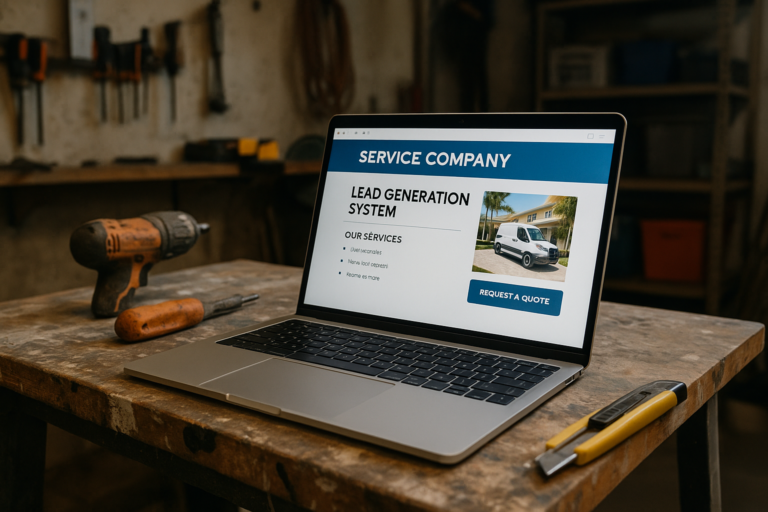
Even well-targeted ads can underperform if they send users to a weak page. The landing page should continue the message of the ad and make conversion easy.
Many small businesses send all ad traffic to the homepage, but that is often too broad. A dedicated service page usually works better because it aligns more closely with what the searcher wants.
Essential landing page elements
- A clear headline matching the searched service
- Location relevance for Miami or the served area
- A short explanation of the offering
- Easy-to-find contact options
- A simple form or booking path
- Trust-building details such as experience, process, or service specifics
- Mobile-friendly design and fast load speed
The page should answer the visitor’s immediate question: “Am I in the right place, and what should I do next?” If that is unclear, conversion rates suffer.
For local lead generation Google Ads, mobile usability is especially important. Many local searches happen on phones, and users often want to call quickly. Prominent click-to-call options and streamlined forms can improve lead volume and lead quality.
Track Conversions Properly From Day One
Without reliable conversion tracking, it is very difficult to judge campaign performance. Clicks and impressions are useful indicators, but they do not show whether the campaign is producing real business outcomes.
At a minimum, local lead campaigns should track meaningful actions such as:
- Phone calls from ads
- Phone calls from the website
- Contact form submissions
- Appointment requests
- Quote requests
- Other high-value actions that reflect real sales intent
Tracking should reflect lead quality as closely as possible. If possible, separate primary conversions from softer actions. For example, a completed quote request may be more important than a simple page view or button click.
This is where experienced Miami PPC management often adds value. The goal is not just to count leads, but to understand which campaigns, keywords, and locations generate the best leads.
Use Budget and Bidding Strategically
Small businesses do not need unlimited budget to start, but they do need a realistic one. If the budget is too low for the competitiveness of the market and the chosen keywords, campaigns may not gather enough data to perform well.
Start narrow before scaling
Instead of spreading a limited budget across too many services and areas, it is often better to begin with:
- A small number of high-intent services
- A defined service area
- Focused ad schedules
- One or two core conversion actions
This approach helps reveal what works before expansion.
Choose bidding with business goals in mind
Bidding strategy depends on available data and account maturity. New accounts often need time to gather conversion history before more automated strategies can work effectively. The right choice should support lead quality, not just low cost per click.
It is also important to remember that the cheapest lead is not always the best lead. A campaign producing fewer but more qualified inquiries may be more valuable than one that generates high volume from poor-fit prospects.
Refine Campaigns With Real Search Data
Strong campaigns improve over time through ongoing optimization. Launching a campaign is only the beginning. The next step is learning from the data and making informed adjustments.
Watch the search terms report
The search terms report often reveals what users actually typed before clicking. This can uncover new high-intent opportunities and identify wasteful queries to exclude. For local businesses, this report is one of the most practical tools for improving lead quality.
Review performance by device, time, and location
Some campaigns perform better on mobile than desktop. Others produce stronger calls during business hours or in certain ZIP codes. Reviewing these patterns can help shape bid adjustments, scheduling, and budget allocation.
Test ads and landing pages
Improvement often comes from small changes. Testing different headlines, calls to action, form lengths, or page layouts can reveal what encourages more qualified contacts. The best-performing version is not always the most creative one; it is usually the clearest and most relevant.
Avoid Common Google Ads Mistakes
Many underperforming accounts struggle for predictable reasons. A business does not need a perfect campaign, but avoiding these common mistakes can save significant budget.
Too-broad keyword targeting
Broad queries may attract users who are researching, job hunting, comparing unrelated options, or outside the service area.
No negative keyword strategy
Without exclusions, campaigns often pay for low-intent or irrelevant traffic that never had a realistic chance of becoming a lead.
Sending traffic to the homepage
Visitors searching for a specific service are more likely to convert on a page built for that service.
Weak conversion tracking
If tracking is incomplete or inaccurate, optimization decisions become unreliable.
Focusing only on clicks
High click-through rate can look positive while still producing poor lead quality. Qualified lead volume matters more.
Ignoring campaign maintenance
Google Ads is not a set-it-and-forget-it channel. Markets change, search terms shift, and competitors adjust.
What to Look for in Miami PPC Management Support
Some small businesses manage ads internally, while others prefer outside help. If support is needed, the most important factors are strategic clarity, transparency, and an emphasis on lead quality.
When evaluating Miami PPC management, look for a process that includes:
- Clear campaign structure by service and location
- Thoughtful keyword and negative keyword management
- Strong landing page alignment
- Accurate conversion tracking
- Regular reporting focused on business outcomes
- Ongoing optimization based on actual search data
If a company is searching for a Google Certified Partner Miami provider, it is still wise to focus on practical execution and communication, not labels alone. The most important question is whether the campaign approach is built around the business’s real service area, goals, and qualified lead definition.
Build for Lead Quality, Not Just Traffic
The most effective Google Ads for Miami small businesses are not necessarily the ones with the highest impression count or the broadest reach. They are the ones that connect local intent with a relevant message, a focused landing page, and a measurable conversion path.
For a small business, that usually means starting with tightly targeted search campaigns, service-based ad groups, local geographic controls, and disciplined tracking. As results come in, the account can be refined based on what actually produces strong leads.
In a competitive local market, Google Ads can become a reliable source of growth when campaigns are built around relevance and intent. A smart small business Google Ads strategy does not chase every click. It prioritizes the searches, locations, and messages most likely to turn into real opportunities.
When local businesses take that approach, paid search becomes more than visibility. It becomes a structured system for attracting qualified leads from the people already looking for what the business offers.