As businesses expand into multiple cities, regions, or service areas, their websites often become harder to manage. What started as a simple site can quickly turn into a confusing collection of duplicate pages, inconsistent navigation, and weak local signals that frustrate users and dilute search visibility.
A well-planned structure solves that problem. For a growing company, the right framework helps customers find the nearest office or service area quickly, helps search engines understand the relationship between locations and services, and gives the business room to scale without rebuilding the website every year.
This is where multiple location website SEO becomes both a technical and strategic issue. It is not just about adding more city pages. It is about creating a website structure that supports user intent, local relevance, content quality, and long-term maintainability.
In this guide, we will look at how to structure a multi location service business website in a way that is clear for users, efficient for search engines, and practical for businesses operating across the United States.
Why website structure matters for multi-location businesses
When a business serves more than one location, visitors usually arrive with a very specific question: Do you serve my area? They may also want to know which office to call, what services are offered in that market, whether the team is local, and how to book an appointment or request a quote.
If the site structure is unclear, several problems appear quickly:
- Users cannot easily find the correct location
- Search engines struggle to understand which page should rank for local searches
- Location pages become too thin or repetitive
- Internal links become inconsistent
- Expansion to new markets becomes messy and time-consuming
A strong website structure for multiple locations helps prevent those issues by organizing content around the way people search and the way the business actually operates.
Start with the right location model
Before building pages, define what kind of multi-location business you are dealing with. Not every company should use the same structure.
Physical office locations
This model fits businesses with real offices, stores, clinics, or branches customers can visit. Each location usually deserves its own page with unique details such as address, phone number, hours, staff information, and services offered.
Service-area locations
This model fits companies that travel to customers rather than serving them at a storefront, such as contractors, home service companies, mobile providers, and regional consultants. In this case, location pages still matter, but the content should focus on service coverage, process, response times, and local relevance rather than a public office address if none exists.
Hybrid models
Some businesses have a mix of branch offices and surrounding service areas. These websites often need one level for physical offices and another for nearby service markets, but they must be structured carefully to avoid cannibalization and duplicate content.
Choosing the correct model early will shape your navigation, URL hierarchy, internal linking, and content strategy.
Build a simple, scalable site hierarchy
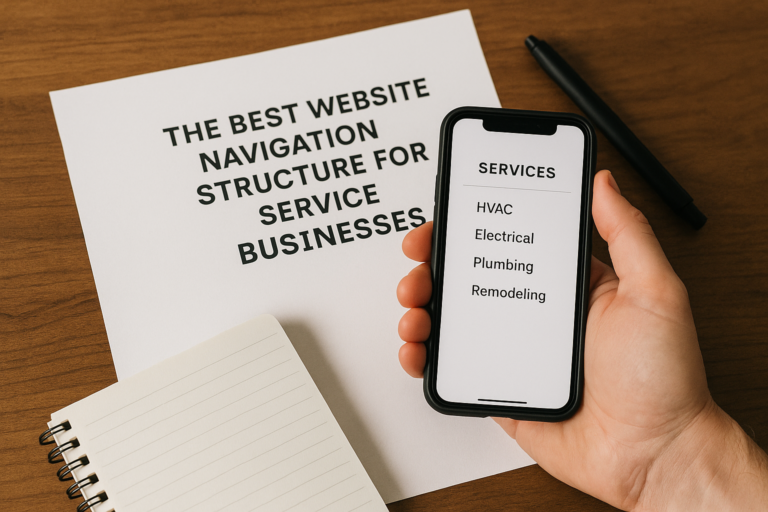
The best multi-location websites are usually the easiest to understand. In most cases, the structure should move from broad to specific.
A common framework looks like this:
- Homepage
- Main services pages
- Main locations hub page
- Individual location pages
- Optional service-plus-location pages when truly needed
This allows users and search engines to understand the site at a glance. Instead of scattering city references throughout dozens of disconnected pages, you create a clear path from the general brand level down to specific local offerings.
Recommended hierarchy example
For many businesses, a clean structure may look like this:
- /services/
- /locations/
- /locations/chicago/
- /locations/dallas/
- /services/roof-repair/
- /locations/dallas/roof-repair/ only if there is enough unique value to justify it
This kind of organization supports both usability and location pages SEO strategy because each section has a clear purpose.
Create a locations hub page that actually helps people
One of the most overlooked assets on a multi-location website is the main locations page. Too often, it is just a plain list of cities with no context. A better approach is to make it a useful navigation hub.
An effective locations page can include:
- A short explanation of where the business operates
- A searchable or scannable list of locations
- Regional grouping if the company covers many markets
- Links to each individual location page
- Helpful next steps for users who are unsure which location applies to them
This page should not compete with individual location pages. Its job is to guide users efficiently and strengthen internal linking across the location section of the site.
What every location page should include
Individual location pages are the foundation of a strong multi location service business website. Each page needs to be genuinely useful, not just a duplicate template with the city name swapped out.
Strong location pages commonly include:
- Location-specific headline and page title
- Clear description of services available in that area
- Local contact details where appropriate
- Address and hours for physical locations
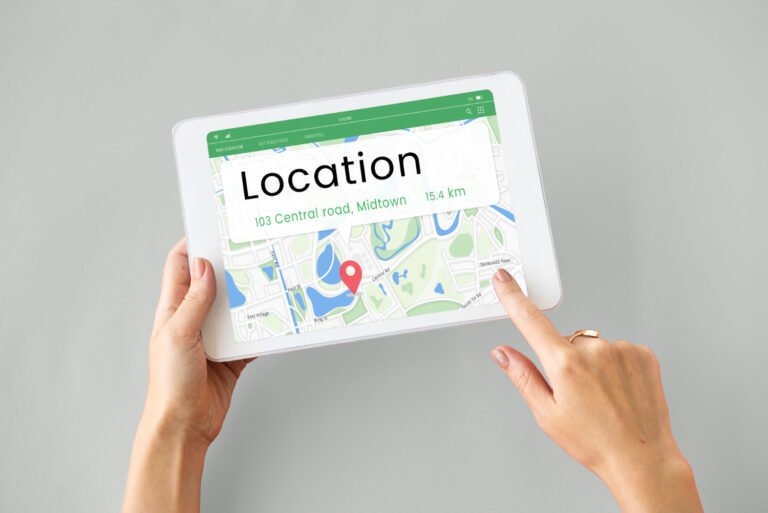
- Embedded map for offices customers can visit
- Unique content about the team, market, or service approach in that area
- Relevant calls to action such as booking, calling, or requesting a quote
- Links to related services and nearby locations
For service-area businesses, the page can instead describe the neighborhoods or regions served, common customer needs in that area, scheduling expectations, and the practical reasons local customers choose that service.
The key principle is simple: every location page should stand on its own as a valuable page for someone in that market.
Avoid thin and duplicate content
This is one of the biggest mistakes in multiple location website SEO. Businesses often create dozens or hundreds of pages using the same paragraph structure with only the city name changed. That rarely creates a strong experience, and it can weaken overall site quality.
Instead of publishing low-value pages at scale, focus on quality and uniqueness. That does not mean every page must be completely different in layout or tone, but it should include enough original substance to justify its existence.
Ways to make location pages more unique include:
- Writing about location-specific services or demand patterns
- Highlighting local staff, office details, or operational differences
- Including unique testimonials when available and appropriate
- Referencing area-specific logistics such as parking, appointment process, or service coverage
- Linking to locally relevant resources or related service pages
If a market does not have enough unique information to support a dedicated page, it may be better to target that area through a broader regional page until more content value exists.
Choose the right approach for service and location combinations
One of the hardest structural decisions is whether to create pages for every service in every location. In some cases, that is useful. In others, it creates hundreds of weak pages.
The decision should depend on search demand, business importance, and content quality.
| Approach | Best for | Benefits | Risks |
|---|---|---|---|
| One page per location | Businesses with a modest service list or broad service offering | Simpler navigation, easier maintenance, stronger location authority | May not target high-intent service-location searches in depth |
| Service pages plus location pages | Most established multi-location businesses | Clear structure, strong topical relevance, easier internal linking | Requires careful content planning |
| Service-by-location pages | Large businesses with enough unique content and demand | Can capture specific local search intent | High duplication risk if pages are templated too heavily |
In many cases, the best path is to start with core service pages and strong location pages, then add service-by-location pages only for priority markets and high-value services where unique content can be created.
Keep navigation intuitive
Good structure is not only about URLs. It also depends on how easily users can move through the site.
If visitors have to guess where to click, bounce rates increase and conversion rates suffer. For multi-location businesses, navigation should make it obvious how to find a location, a service, or both.
Useful navigation practices
- Include a primary menu link for locations or areas served
- Use clear labels such as “Locations,” “Areas We Serve,” or “Our Offices”
- Add location links in the footer for important markets
- Use breadcrumbs on location pages
- Link between nearby or related locations when helpful
- Connect service pages and relevant location pages naturally
Avoid stuffing the main navigation with dozens of city links. If the business has many locations, a hub page, expandable menus, regional grouping, or a location finder often works better.
Use internal linking to reinforce relevance
Internal linking is essential to any strong location pages SEO strategy. It helps search engines understand which pages are related, and it helps users discover the next logical step.
For example:
- The locations hub should link to every major location page
- Each location page should link to core service pages
- Service pages can link to relevant location pages where appropriate
- Nearby locations can link to one another if users may reasonably compare them
- Blog content can link to both services and location pages when context supports it
Anchor text should be natural and descriptive. Over-optimized repetitive anchor text is unnecessary. Clarity matters more than forcing exact-match phrases into every link.
Make local SEO signals consistent
Even a well-structured website can underperform if local business details are inconsistent. Every location that represents a real office should have accurate and consistent information across the website and major business listings.
Important details include:
- Business name presentation
- Address format
- Phone number
- Hours of operation
- Service categories
- Appointment or contact instructions
On the website itself, these details should be easy to find on each location page. Structured data can also help clarify page meaning for search engines, especially when used correctly for local business information.
For service-area businesses, be careful not to imply the existence of offices where none exist. Location relevance should come from genuine service coverage and useful local content, not from misleading address usage.
Think mobile first
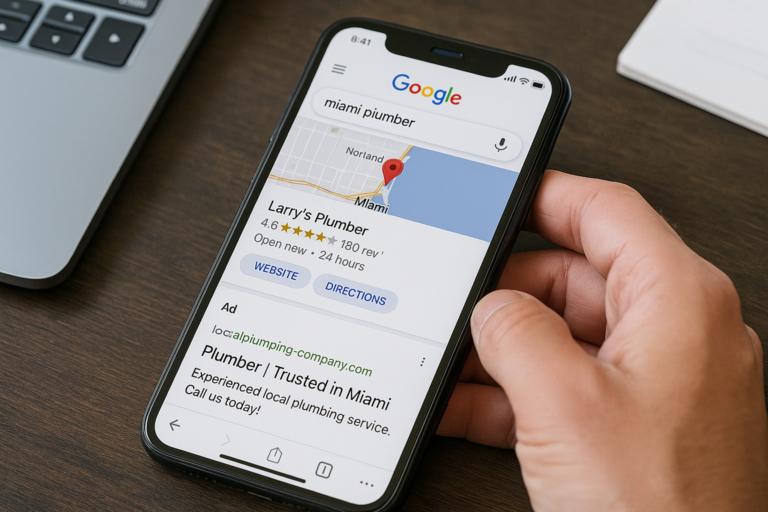
Many local visitors arrive from mobile search and need immediate answers. They may be looking for a phone number, hours, directions, or a fast way to request service.
That means your location structure should perform well on smaller screens:
- Location pages should load quickly
- Addresses and phone numbers should be easy to tap
- Menus should remain simple and clear
- Maps should not slow the page unnecessarily
- Calls to action should appear early without overwhelming the page
A location page that looks complete on desktop but feels crowded or confusing on mobile can quietly lose a large share of potential leads.
Support growth with templates, but do not over-template content
Scalability matters. A growing business may need to add new locations regularly, and that process should not require rebuilding page layouts from scratch every time.
Using a template for consistent design is smart. It keeps pages organized and easier to manage. The problem starts when the content inside those templates becomes too repetitive.
A better approach is to standardize the structure while customizing the substance. For example, every location page may contain the same sections:
- Introduction
- Services in that area
- Why customers in that market choose the business
- Office or service details
- Related service links
- Contact action
But the wording, examples, and local details should be meaningfully adapted for each page.
Do not let blogs or landing pages compete with location pages
Another common problem is keyword overlap. Businesses sometimes publish blog posts, ads landing pages, and location pages all targeting nearly the same city-and-service phrase. This can confuse search engines and weaken page focus.
To avoid that, assign clear roles to different page types:
- Location pages target ongoing local business intent
- Service pages target core service relevance
- Blog posts support education, topical authority, and long-tail discovery
- Campaign landing pages support specific advertising or conversion goals
When each page type has a defined purpose, the entire site becomes easier to scale and easier to optimize.
Measure what users actually do
A good structure should improve both visibility and usability. That means performance should be evaluated beyond rankings alone.
Useful indicators include:
- Organic traffic to location pages
- Calls, form submissions, and bookings from each location page
- Click paths from service pages to locations
- Bounce and engagement patterns on mobile
- Pages that receive impressions but low clicks
- Location pages with weak conversion behavior
These signals help reveal whether the structure is truly helping customers or simply expanding the number of indexed pages.
Common mistakes to avoid
Even experienced businesses can weaken their site by making structural choices that seem efficient but create long-term problems.
Common mistakes include:
- Creating a separate page for every city with almost identical content
- Using confusing navigation with services and locations mixed together randomly
- Failing to create a central locations hub
- Publishing service-by-location pages without enough unique value
- Ignoring mobile usability on location pages
- Letting old, moved, or duplicate location pages remain live
- Using inconsistent business details across pages
- Targeting markets the business does not genuinely serve well
Most of these issues can be prevented by starting with a realistic content plan instead of building pages solely around keyword variations.
A practical way to plan your structure
If you are building or restructuring a multi-location website, a practical process often looks like this:
- List all real offices, branches, or service areas
- List all core services
- Decide which locations deserve dedicated pages now
- Create a clean URL and navigation hierarchy
- Build a strong locations hub page
- Develop a content template for location pages
- Customize each page with unique local value
- Add internal links between services and locations
- Review for duplication, usability, and scalability
- Track performance and expand strategically
This keeps the site grounded in user needs and operational reality, which is far more sustainable than publishing dozens of thin pages all at once.
Conclusion
A successful website structure for multiple locations should make one thing easy: helping the right visitor reach the right local page with confidence. When the structure is clear, users can quickly find the office or service area that matters to them, and search engines can better understand how the business is organized.
The strongest multiple location website SEO strategies are not built on volume alone. They are built on clarity, relevance, and consistency. That means using a logical hierarchy, creating genuinely useful location pages, avoiding duplicate content, strengthening internal linking, and planning for long-term growth.
For any multi location service business website, the goal is not just to add more pages. It is to create a scalable system that improves visibility without creating confusion. With the right location pages SEO strategy, a growing business can support more markets, improve user experience, and build a website that remains organized as the company expands nationwide.