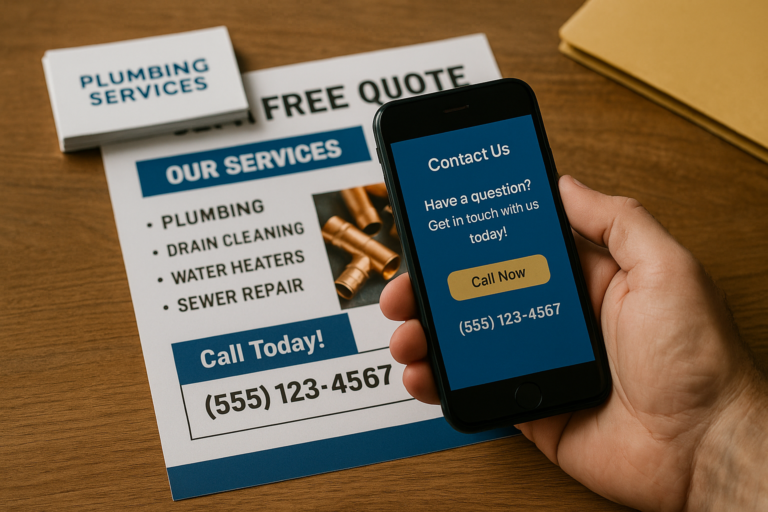

A service business website should do more than explain what you do. It should guide the right visitor toward the right next step. That is where a strong call to action becomes one of the most important parts of your website strategy.
Many companies assume the best CTA for a service business website is simply a bold button that says “Contact Us” or “Get a Quote.” In some cases, that works. But if your goal is to increase qualified leads from your website, the real answer is more strategic. The best-performing websites use calls to action that match visitor intent, reduce friction, build trust, and move prospects toward a conversation only when they are ready.
For service-based businesses across the United States, this matters because not all leads are equal. More traffic is not enough. More form submissions are not enough. If the people reaching out are outside your budget, outside your service area, unclear about your process, or not truly ready to hire, your website may be generating activity without generating real opportunity.
The best call-to-action strategy helps filter, educate, and convert. It makes it easier for ideal clients to take action and less likely for poor-fit prospects to waste time. That balance is what turns a basic website into a lead-generation tool.
Why Calls to Action Matter More Than Most Service Businesses Realize
Your website visitors usually make decisions quickly. Within seconds, they are asking themselves a few simple questions:
- Does this company look professional?
- Do they seem qualified for my problem?
- Can they help someone like me?
- What should I do next?
The call to action answers that last question. If it is vague, buried, too aggressive, or disconnected from what the visitor needs, conversion rates suffer.
A strong service business website call to action does several things at once:
- Clarifies the next step
- Sets expectations
- Reduces confusion
- Builds confidence
- Supports lead quality
That is why website calls to action that convert are rarely random. They are built around the buyer journey.
The Biggest CTA Mistake on Service Business Websites
The most common mistake is relying on one generic CTA everywhere on the site.
For example, many websites use the same button on every page:
Contact Us
There is nothing wrong with that phrase by itself. The problem is that it often lacks context. A first-time visitor on your homepage may not be ready to contact you yet. Someone reading a detailed service page may be much closer to taking action. A person comparing providers may want to see pricing guidance, project examples, or your process before reaching out.
When every page asks for the same commitment, you miss the opportunity to align the CTA with the visitor’s level of interest.
If you want to know how to increase qualified leads from your website, start by moving beyond a one-size-fits-all button strategy.
The Best CTA Strategy: Match the CTA to Visitor Intent
The best CTA for a service business website is not a single phrase. It is a structured system of primary and secondary calls to action designed for different stages of decision-making.
In simple terms, your website should offer:
- A primary CTA for visitors who are ready to speak with you
- A secondary CTA for visitors who need one more step before committing
- Contextual CTAs placed throughout the site based on page intent
This approach improves usability and helps generate better leads because it respects how people actually make decisions.
Primary CTA: High-Intent Conversion
Your primary CTA is for the visitor who already believes you may be the right fit. This is the action closest to becoming a lead.
Examples include:
- Request a Quote
- Schedule a Consultation
- Book a Discovery Call
- Start Your Project
- Request a Website Review
These CTAs work best when they are clear, specific, and connected to a meaningful business conversation. A vague CTA like “Submit” is weaker than “Schedule a Consultation” because it does not explain the value of clicking.
Secondary CTA: Lower-Friction Next Step
Not every visitor is ready to talk today. Some need reassurance, proof, or a better understanding of what you offer. A secondary CTA gives those visitors a lower-friction path forward.
Examples include:
- View Our Work
- See How the Process Works
- Read Client Success Stories
- Download a Service Guide
- Check Website Support Options
Secondary CTAs are especially useful on homepage sections, blog articles, and top-of-funnel service pages. They keep visitors engaged instead of losing them because the only available action felt too big.
Contextual CTA: Page-Specific Relevance
A contextual CTA is tailored to the content on a specific page.
For example:
- A web design page might use: Request a Website Consultation
- A Google Ads page might use: Discuss Your Ad Strategy
- A maintenance page might use: Ask About Ongoing Website Support
- A local SEO page might use: Get an SEO Review
These CTAs often outperform generic buttons because they feel more relevant and specific to the visitor’s goal.
What Makes a CTA Attract Qualified Leads Instead of Unqualified Ones
If your website gets inquiries but too many are poor fits, your calls to action may be encouraging too much volume without enough clarity.
Qualified-lead-focused CTAs do not just ask people to reach out. They help people self-select.
That means your CTA strategy should support qualification in four ways.
1. Be Specific About the Offer
The more specific your CTA is, the more likely it is to attract people who understand what they are requesting.
Compare these:
- Contact Us
- Schedule a 30-Minute Website Consultation
The second option sets a clearer expectation. It suggests a professional process and tends to attract more serious inquiries.
2. Use Supporting Copy Near the CTA
The button text matters, but the surrounding copy often matters more. A short line near the CTA can explain who the service is for, what happens next, or what type of project you handle.
For example:
Need a professional website that supports lead generation, SEO, and long-term growth? Schedule a consultation to discuss your goals.
This kind of messaging helps screen out mismatched visitors while improving conversions among better-fit prospects.
3. Place CTAs After Key Trust Signals
Service businesses sell expertise, reliability, and outcomes. That means visitors often need proof before they act.
Your strongest calls to action should appear after trust-building elements such as:
- Service benefits
- Industry experience
- Process explanations
- Portfolio examples
- Testimonials
- Clear service categories
When a CTA appears immediately after persuasive information, it feels like a logical next step rather than a sales push.
4. Ask for the Right Amount of Commitment
Sometimes low conversion rates happen because the CTA asks for too much too soon. Other times, low lead quality happens because the CTA is too casual and easy for anyone to click without commitment.
The solution is balance. For higher-value services, “Schedule a Consultation” often works better than “Get Started Now” because it sounds professional and realistic. For recurring services like maintenance, “Ask About Support Plans” can feel more approachable than “Buy Now.”
Best CTA Types by Page on a Service Business Website
Different pages serve different purposes. Your CTA strategy should reflect that.
| Page Type | Best CTA Approach | Why It Works |
|---|---|---|
| Homepage | Primary CTA plus one secondary CTA | Serves both ready-to-buy and still-researching visitors |
| Service Pages | Specific consultation or quote CTA | Matches high-intent visitors looking for a solution |
| About Page | Consultation CTA after trust-building content | Captures visitors evaluating credibility |
| Portfolio or Case Study Pages | Start a similar project | Connects proof with immediate action |
| Blog Posts | Relevant soft CTA tied to the topic | Converts educational traffic without feeling forced |
| Contact Page | Clear, direct conversion CTA with expectations | Supports visitors already ready to reach out |
CTA Copy That Typically Performs Well for Service Businesses
The best-performing CTA language is usually clear, direct, and benefit-oriented. It should sound natural and professional, not pushy.
Strong examples include:
- Request a Consultation
- Schedule a Discovery Call
- Request a Quote
- Discuss Your Project
- Get a Website Review
- Talk With an Expert
- See How We Can Help
Depending on the service, softer CTAs can also work well:
- Learn More About Our Process
- Explore Our Services
- View Recent Projects
- See Website Support Options
What matters most is alignment. The CTA should reflect the service, the page, and the visitor’s likely mindset.
Where to Place Calls to Action for Better Conversion Rates
Even the best CTA will underperform if visitors do not encounter it at the right time.
For most service websites, strong placement includes:
Above the Fold
Your top section should include a clear primary CTA so high-intent visitors can act immediately. This is especially important for people coming from branded searches, referrals, or paid ads.
After Core Service Explanations
Once a visitor understands what you do and who you help, offer a logical next step.
After Trust-Building Sections
Testimonials, years of experience, process explanations, and examples often increase readiness. A CTA placed right after these sections can perform well.
At the End of Key Pages
Visitors who read to the bottom are showing interest. Always give them a next action.
Sticky Header or Persistent Navigation CTA
For many service businesses, a consistent top-right button such as “Request Consultation” or “Contact” improves usability and keeps the next step visible throughout the site.
How Forms Affect CTA Performance and Lead Quality
Your CTA does not end with the button. The form or landing page that follows is part of the same conversion system.
If the CTA says “Schedule a Consultation,” but the visitor lands on a confusing contact page with too many fields or no explanation, conversions drop.
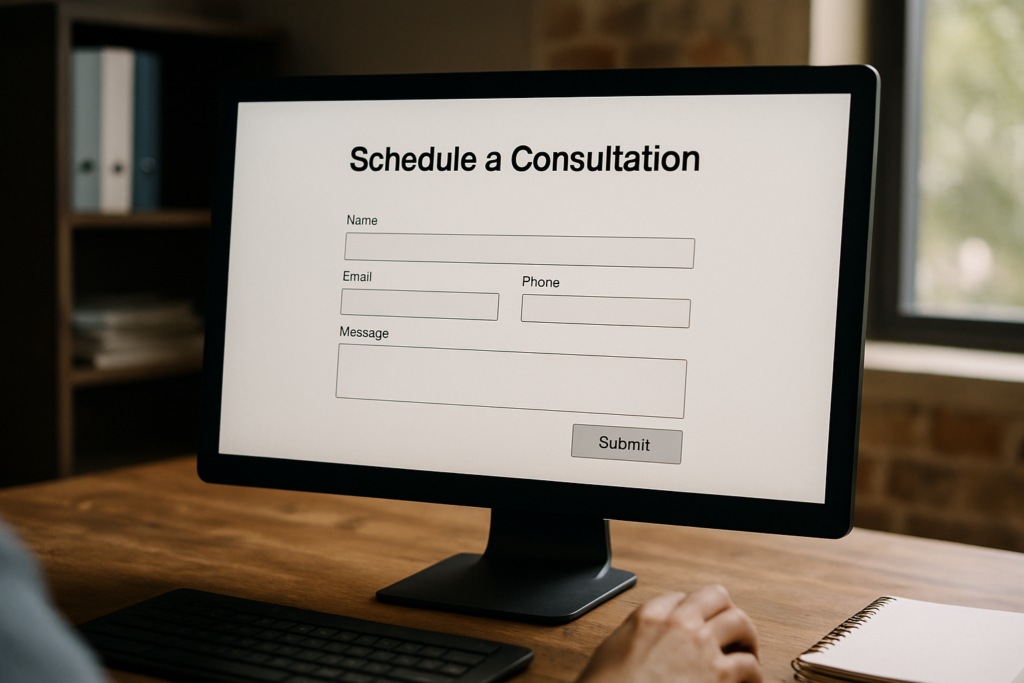
To improve lead quality and completion rates:
- Keep forms simple but useful
- Ask qualifying questions only when necessary
- Explain what happens after submission
- Use field labels that are easy to understand
- Make mobile completion easy
Examples of helpful qualifying fields include:
- Type of service needed
- Business name
- Project goals
- Estimated timeline
These can improve lead quality without creating too much friction when used thoughtfully.
How to Increase Qualified Leads From Website Traffic You Already Have
If your site already gets visitors but too few good inquiries, changing CTA strategy can create meaningful improvement without increasing traffic.
Focus on these practical upgrades:
Clarify Who You Help
Your CTA will perform better when visitors clearly understand whether your services fit their needs. Messaging around the CTA should identify the audience, problems solved, or project type.
Improve Service-Page Intent Matching
Do not send every visitor to a generic contact page. A targeted service page with a matching CTA often converts better because it maintains relevance.
Reduce Uncertainty
Visitors hesitate when they do not know what happens next. Add short supporting text such as:
Tell us about your project and we will follow up to discuss the best next steps.
This lowers anxiety and makes action easier.
Use Better Button Language
Replace weak labels like “Submit” with language tied to user intent. Even small copy changes can improve conversions.
Test One Change at a Time
CTA optimization works best when changes are measured. Update button text, placement, supporting copy, or form flow individually so you can identify what improves performance.
Common CTA Problems That Hurt Service Business Websites
If your website calls to action are not converting, one or more of these issues may be responsible:
- The CTA is too generic
- The page does not build enough trust before asking for action
- The CTA is visually hard to find
- The form asks for too much information
- The offer is unclear
- The CTA does not match the page topic
- There is no secondary CTA for lower-intent visitors
- Mobile users have a poor experience
Fixing these issues often produces better results than redesigning an entire website.
Why the Best CTA Strategy Is Really a Conversion Strategy
It is tempting to think of calls to action as isolated buttons, but they are really part of a larger conversion system. Your message, page structure, trust signals, service positioning, and user experience all influence whether a CTA succeeds.
That is especially true for service businesses, where customers are choosing who to trust with meaningful projects, ongoing support, or important business needs.
The most effective websites do not just ask for action. They prepare the visitor for action. They communicate professionalism, explain the value, address uncertainty, and offer the next step at the right moment.
When that happens, the result is not just more leads. It is more qualified leads.
Conclusion
The best call-to-action strategy for service business websites is not about using the loudest button or the most aggressive wording. It is about guiding visitors intelligently.
A strong service business website call to action should match visitor intent, support trust, clarify the next step, and make it easier for the right prospects to reach out. In many cases, the best CTA for a service business website is a combination of primary, secondary, and page-specific calls to action working together across the site.
If you want to increase qualified leads from your website, start by looking closely at your current CTA strategy. Ask whether your buttons are specific enough, whether your pages build enough confidence, whether your forms support qualification, and whether each page offers the most relevant next step.
When website calls to action that convert are built with strategy instead of guesswork, your website becomes more than an online brochure. It becomes a more effective tool for attracting better opportunities and supporting long-term business growth.